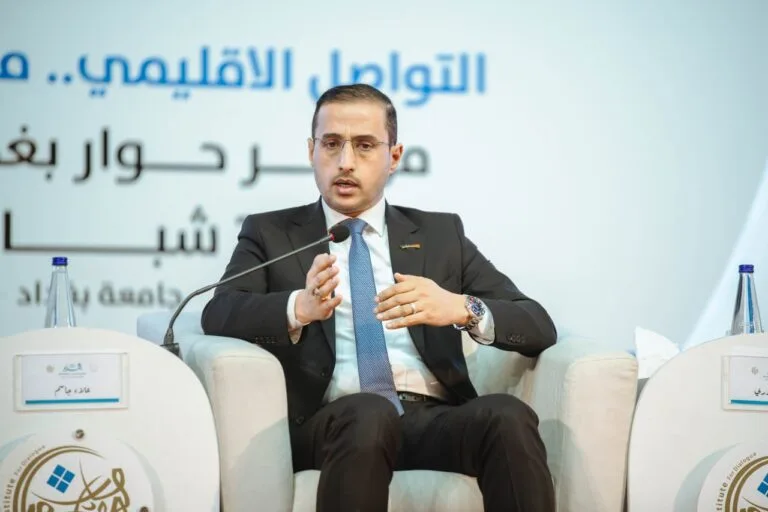
Baghdad, Iraq – Alaa Jassim, CEO of Earthlink and head of fiber optics for the Middle East and North Africa, stated on Saturday that the American Starlink service could be a suitable solution for delivering internet services to remote areas in Iraq that are difficult to connect to terrestrial internet networks. He also called for regulating economic activities related to digital platforms and expanding the country’s digital economy. Jassim’s remarks came during his participation in the second session of the eighth Baghdad Dialogue conference, titled “Communications and New Generation Technologies: Between Regional Transformations and the Digital Information Conflict.” In this session, he addressed the current state of communications infrastructure and the challenges facing the internet sector in Iraq.
Communication is the lifeblood
Jassem emphasized the importance of government stability for the telecommunications sector. He noted that the relationship with the government and relevant authorities is fundamental to infrastructure development. He stated that the telecommunications sector has become “the lifeblood of the economy” due to its direct impact on various economic and service sectors. He also explained that his company had previously faced difficulties in obtaining the necessary approvals for laying fiber optic cables. He added that the current phase is witnessing greater cooperation. This coincides with increasing demands from various regions for internet access and improved connectivity.
Fiber optic cable covers most governorates
Jassem explained that the fiber optic network has managed to cover most of Iraq’s governorates, with the exception of Mosul, Anbar, and Wasit. In these governorates, the implementation of some projects has been delayed due to difficulties in obtaining approvals. He noted that political factors in some areas have hindered the timely laying of cables. He confirmed that meetings with the Ministry of Communications are now held regularly to follow up on matters related to network development.
E-commerce and the digital economy
On the economic front, Jassim pointed out that the quality of internet services suffered from significant problems before the deployment of fiber optic networks. In contrast, e-commerce has witnessed remarkable expansion with the improvement of telecommunications infrastructure. He affirmed that Iraq currently occupies an average position in the digital economy but aspires to compete with developed countries. He emphasized that technological development does not necessarily require massive expenditure; rather, it requires a robust and suitable infrastructure.
Starlink for remote areas
Regarding the Starlink service, Jassim said its use could be suitable in remote areas where terrestrial internet access is difficult to reach. He believes satellite technology can help bridge coverage gaps in some regions. At the same time, he stressed the need to regulate the service’s use within official frameworks. He also warned of the consequences of illegal use of services and communications, and called for clear regulations to ensure market organization and protect competition. He further noted the existence of unfair competition in the internet market, describing one form of it as providing poor-quality services that negatively impacts the market.
Call to regulate TikTok’s profits
Jassem called for a clear regulatory framework for TikTok, given its status as a profitable platform increasingly involved in economic and digital activity. He emphasized that the expanding use of online platforms and the growth of digital commerce and services necessitate the development of regulations governing the digital economy. This would ensure the utilization of its revenues and regulate related commercial activities. He also stressed that developing telecommunications infrastructure, alongside regulating digital services and platforms, are essential elements for promoting digital transformation in Iraq. This, in turn, would pave the way for more technology-based economic activities.