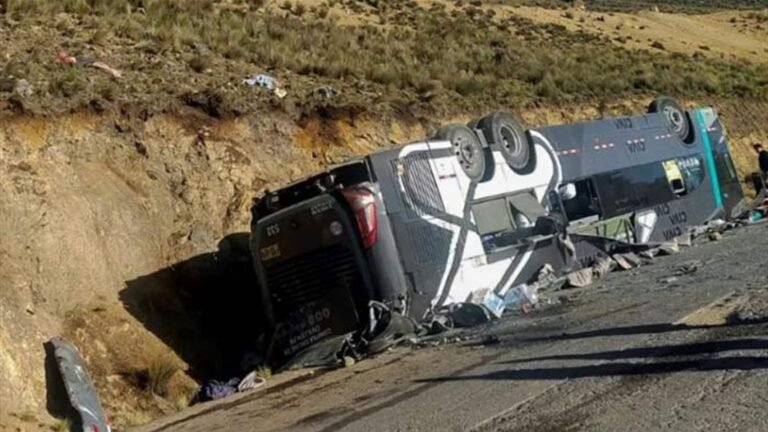
Kabul, Afghanistan – In a tragedy that shook the Afghan community at the end of Eid al-Adha, at least 18 people were killed and 35 others seriously injured when a truck carrying Afghan refugee families overturned as they returned from Pakistan.
The tragic accident occurred on Saturday on the main highway connecting the capital, Kabul, to Jalalabad in Nangarhar province, specifically within the geographical boundaries of Laghman province.
Abdul Malik Niazai, spokesman for the governor of Laghman province, confirmed that the accident resulted in a heavy toll, including 10 children and 5 women among the dead. He also indicated that rescue teams rushed the injured to hospitals in Nangarhar province for emergency treatment.
For his part, Zabihullah Mujahid, spokesman for the Taliban government, expressed his deep sorrow over the tragedy. He offered his sincere condolences to the families of the victims who lost their lives on this road, which has witnessed repeated tragic accidents.
dilapidated roads and the challenges of forced return
This tragedy has once again brought to the forefront the issue of traffic accidents in Afghanistan, a recurring phenomenon resulting from a complex set of factors. Chief among these are the poor maintenance of roads severely damaged by decades of conflict, as well as reckless driving and the absence of an effective traffic management system to regulate the movement of large trucks.
However, this incident takes on a more complex humanitarian dimension, as the victims were part of a massive wave of displacement imposed by regional politics.
Since 2023, authorities in Islamabad have waged a widespread crackdown against migrants, forcing hundreds of thousands to return. At the same time, Iran has intensified similar expulsions.
According to data from the UNHCR and the IOM, more than 447,400 Afghans have returned from Pakistan since the beginning of this year alone.
A humanitarian crisis on wheels
These strict policies force families—including those who have spent decades in Pakistan—to travel in overcrowded commercial trucks carrying all their belongings, leaving them vulnerable to the dangers of the road.
This incident follows a series of tragedies, most notably the August crash in western Afghanistan. In that accident, a bus carrying migrants returning from Iran collided with another vehicle, killing 78 people, including 19 children. These recurring incidents reflect the human suffering faced by returning Afghans. They find themselves facing the challenge of simply surviving the journey back to a homeland that is itself grappling with economic hardship and crumbling infrastructure.