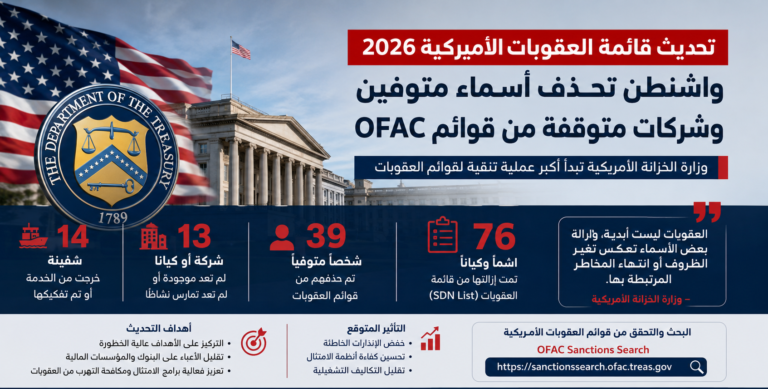
Washington, DC – The US Treasury Department, through its Office of Foreign Assets Control (OFAC), announced a major update and refinement of its sanctions lists. The process involved removing 76 names and entities from the Specially Designated Nationals and Blocked Persons List (SDN List). This move aims to improve the effectiveness of sanctions programs and focus efforts on the most serious financial and security threats.
The ministry said the review process included removing 39 deceased individuals, as well as 14 vessels that had been decommissioned or dismantled. It also included 13 companies and entities that no longer conduct any active business. This followed joint reviews by relevant government agencies to ensure that removing these names did not conflict with U.S. security or political interests.
Why did Washington remove names from the sanctions lists?
According to the U.S. Treasury Department, the significant increase in the number of sanctions in recent years has led to a greater operational burden on banks and financial institutions worldwide. These institutions are forced to check thousands of names daily to ensure compliance with U.S. sanctions.
The ministry explained that many of the listed names no longer pose an actual threat, whether due to death, cessation of activity, or the disappearance of their associated financial networks. This has resulted in a significant drain on financial institutions’ resources, diverting them to pursue low-risk targets instead of focusing on sanctions evasion attempts and illicit financial activities.
Unprecedented rise in the use of US sanctions
Treasury Department data indicates that the number of new designations on sanctions lists rose from approximately 880 annually in 2017 to over 3,000 in 2024. This increase coincided with Washington’s expansion of its use of economic sanctions against countries, entities, and individuals linked to issues including Russia, Iran, Syria, Venezuela, and money laundering and terrorist financing networks. Observers believe this expansion has created growing challenges for the global banking sector, particularly concerning compliance, auditing, and monitoring of cross-border financial transfers.
Sanctions are not permanent
Officials at the U.S. Treasury Department emphasized that sanctions are not intended to be a permanent tool. They also noted that removing names from the lists may reflect changing circumstances or the end of the associated threats. The department added that the success of sanctions is not measured solely by the number of names listed, but also by their impact on changing behaviors and achieving U.S. national security and foreign policy objectives.
Direct impacts on banks and financial institutions
Financial compliance experts anticipate that the OFAC blacklist purge will reduce false positives within banking systems. It will also improve the efficiency of anti-money laundering and counter-terrorism financing programs, as well as lower operational costs associated with the ongoing vetting of blacklisted names. The US move is also likely to prompt international financial institutions to update their databases and review their compliance systems to ensure alignment with the new regulations issued by the US Treasury Department.
What is an SDN list?
The Specially Designated Nationals (SDN) list is one of the world’s most important financial databases. It includes individuals, companies, vessels, and organizations with which the United States prohibits direct or indirect dealings or financial transactions. Banks, money transfer companies, and investment firms worldwide use this list as a primary reference for implementing U.S. sanctions and complying with international regulatory requirements.