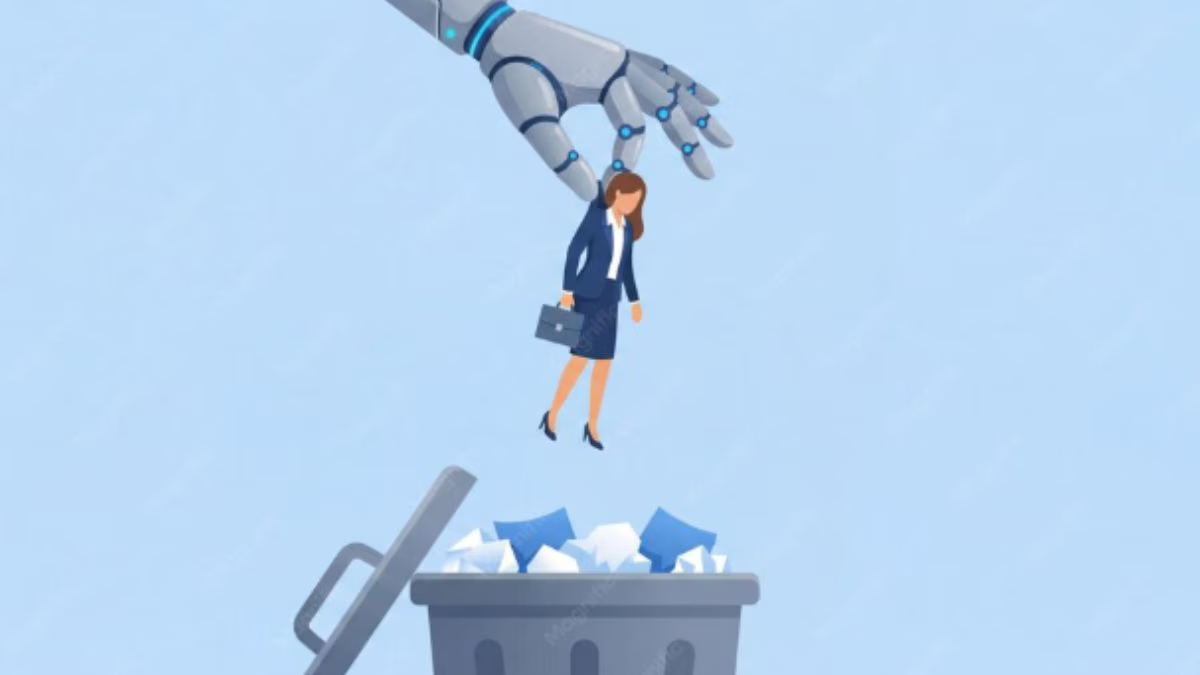
Washington – Beijing – The global job market has entered a period of violent “reshaping,” with AI technologies now the primary driver behind hiring and firing decisions. Obviously, by May 2026, the world is split into two camps: while a wave of massive layoffs sweeps through major tech firms in the United States, China has taken a surprising legislative path by imposing strict legal protections for workers. This marks a silent international conflict over managing the “Fourth Industrial Revolution” without compromising human job security.
“Automation First”: Why Are American Companies Sacrificing Traditional Employees?
In the United States, service and tech institutions have begun rapidly downsizing their workforces, relying on smart systems capable of performing routine and analytical tasks faster than humans. Accordingly, experts believe the concept of the “traditional job” is fading, sparking outrage within labor unions that view excessive automation as a threat to livelihoods. Clearly, the American model prioritizes “maximizing efficiency” and cutting costs, even if the price is the loss of millions of jobs.
“The Beijing Shield”: How Chinese Law Protects Workers from AI Overreach?
Conversely, labor courts in China have issued revolutionary legislation preventing companies from replacing humans with AI at the “click of a button.” As a result, firms are now legally mandated to provide retraining programs or job alternatives before any automation process. This policy aims to maintain social stability and prevent shocks in its massive labor market. Amidst this contrast, a major question arises: will laws manage to catch up with the speed of tech evolution, or will the “machine” ultimately prevail?