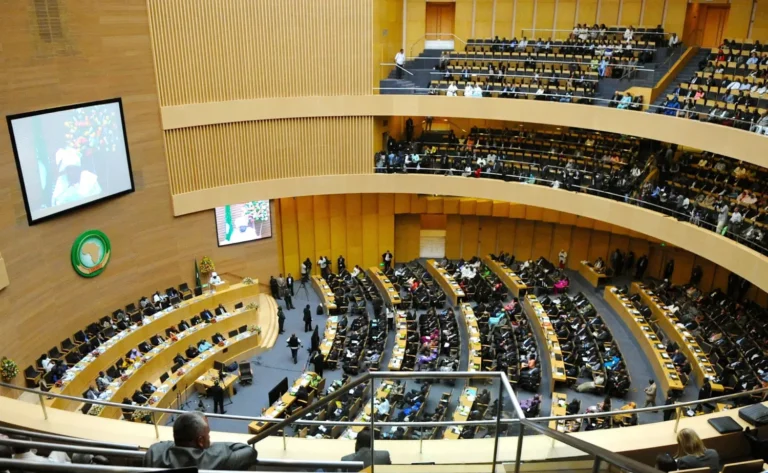
Abuja – In a move confirming Nigeria’s regained diplomatic clout on the continent, Abuja has officially assumed the chairmanship of the African Union (AU) Peace and Security Council for May 2026. Obviously, Nigeria is steering the helm of African security at a “highly sensitive” time; the continent is facing a surge in armed conflicts and increased extremist activity, placing the new chairmanship under a historical responsibility to stabilize burning conflict zones.
“Continental Security”: How Will Nigeria Tackle Extremist Groups and Transitional Crises?
The Nigerian chairmanship relies on an intensive agenda focused on enhancing military coordination among member states to combat terrorism and activating “early warning” mechanisms to prevent conflicts. Accordingly, Abuja seeks to reduce reliance on foreign interventions, adopting the principle of “African Solutions,” reflecting its long-standing experience in facing security challenges in West Africa. Clearly, the focus will also be on supporting political transition paths in countries experiencing internal unrest.
“African Confidence”: Nigeria as a Safeguard for Sensitive Security Files
Observers believe Nigeria’s selection for this task is no coincidence but a recognition of its ability to manage complex crises. As a result, Abuja is expected to work on improving the AU’s rapid response capabilities and building more effective security partnerships. In this landscape, Nigeria becomes the “spearhead” of the African collective security project during May, amidst continental aspirations that its chairmanship will achieve real breakthroughs in mediation and peace files.