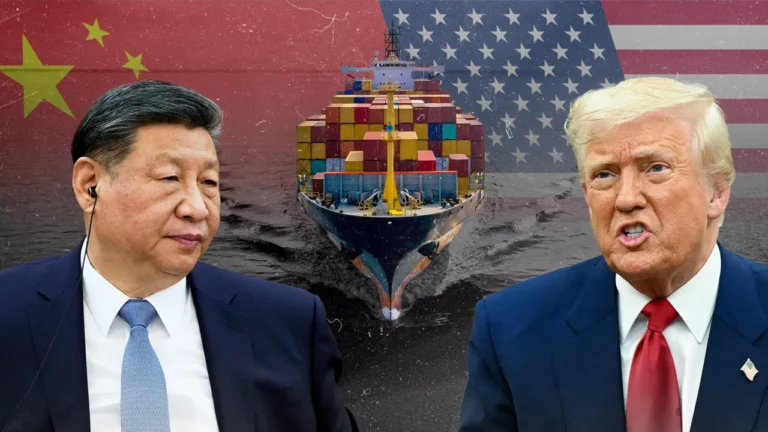
Beijing, China – In an effort to contain the high-tech rivalry, US media reports have revealed serious moves by the United States and China to establish formal dialogue channels dedicated to artificial intelligence.
This endeavor aims to prevent the fierce technological competition between the two powers from escalating into uncontrollable security or military crises. This is especially important given the integration of smart technologies into weapons systems and strategic decision-making.
A key item on Beijing’s agenda
The Wall Street Journal, citing multiple sources, reported that the two governments are considering including artificial intelligence as a key item on the agenda of the upcoming summit between President Donald Trump and his Chinese counterpart, Xi Jinping, scheduled for May 14 and 15 in Beijing.
The two sides envision establishing a regular dialogue forum to address the risks arising from unforeseen malfunctions in AI models. They are also discussing the dangers of autonomous weapons systems. Furthermore, they want to prevent the misuse of open-source code by non-state actors.
Communication channels and officials
The US Treasury Secretary, Scott Besant, is leading the consultations, while China’s Vice Finance Minister, Liao Min, is participating.
Liu Fengyu, spokesperson for the Chinese Embassy in Washington, stated that Beijing is ready for dialogue on mitigating technological risks. This reflects a shared understanding that these technologies pose strategic risks that exceed any single country’s ability to manage.
Trust challenges and historical precedents
Despite these trends, skepticism persists regarding the effectiveness of these channels. Analysts recall the Biden administration’s previous attempt in 2023, which yielded only a preliminary agreement that the authority to launch nuclear missiles would remain in human hands, not machines, by 2024, without any tangible progress on other issues.
Rush Dorsey, a professor at Georgetown University and a former National Security Council official, pointed out that history shows Beijing has failed to respond to “hotlines” in major crises. He cited the 2001 drone crash and the 2023 spy balloon crisis.