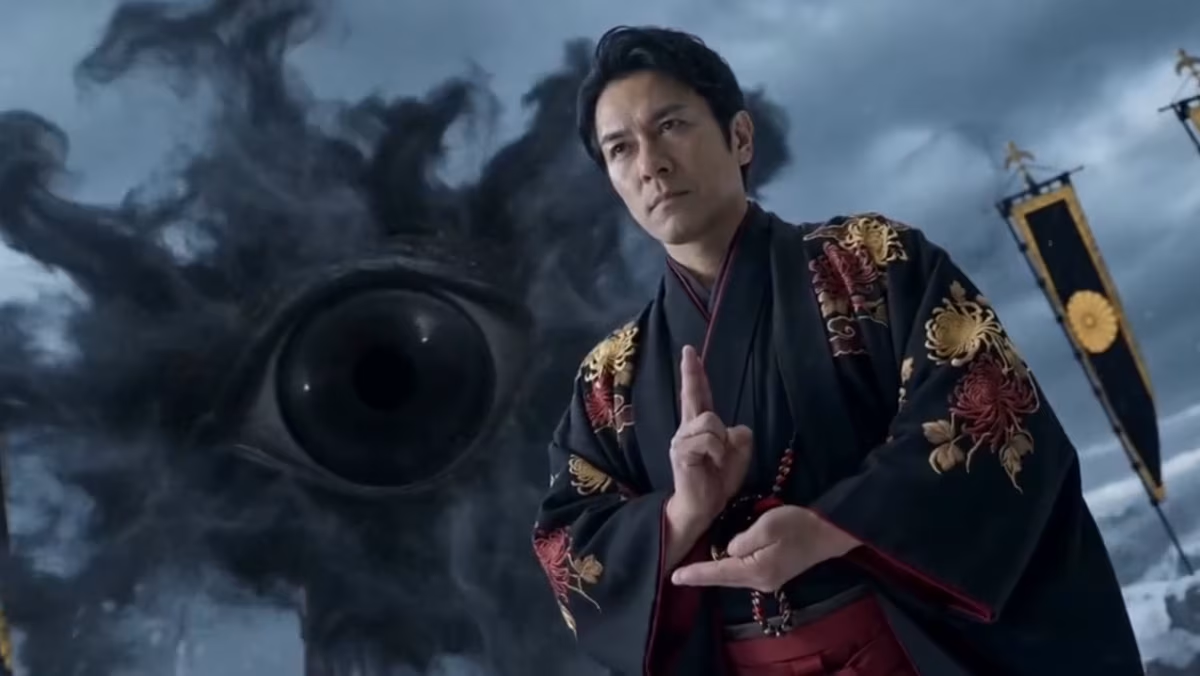
Beijing – The Chinese drama industry is grappling with mounting challenges as “Artificial Intelligence” (AI) rapidly expands into artistic production, screenwriting, and “Visual Effects” (VFX). This technological surge has sparked widespread concern within Beijing’s cultural circles regarding the future of traditional jobs and the machine’s ability to replicate the nuances of human creativity.
Cost Reduction and Threats to Traditional Roles
Media reports indicate that major production companies and digital platforms have begun relying heavily on AI tools to execute tasks that previously required large teams of writers and designers. Specialists believe this shift could lead to significant layoffs in fields such as “Film Editing,” visual graphics, and initial script drafting, given the smart systems’ ability to generate content at high speeds and lower costs.
The Struggle for Creativity and Intellectual Property
Conversely, Chinese artists and screenwriters have warned that over-reliance on technology may weaken the emotional depth of dramatic works, asserting that algorithms cannot simulate profound human experiences. Furthermore, complex issues regarding “Intellectual Property” (IP) have surfaced, particularly as AI systems analyze previous artistic works to generate similar scenes, placing the future of artistic professions at a critical legal and ethical crossroads.
A Supportive Tool or a Total Replacement?
Despite these apprehensions, tech experts argue that AI could remain a “supportive tool” that enhances production quality and develops special effects rather than serving as a total replacement for creators. Experts emphasize that for this model to succeed, the leadership role of the human element must be preserved to ensure the delivery of content with genuine artistic value that resonates with audiences.