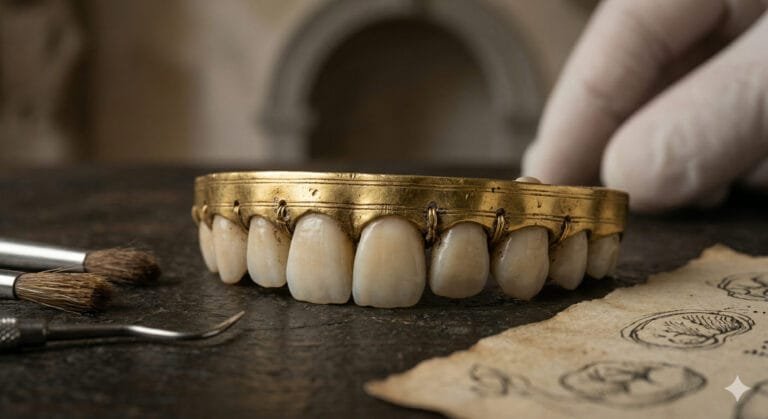
Rome – A team of archaeologists in Italy has announced a rare archaeological and medical discovery: a gold dental prosthesis dating back approximately 400 years. This find is considered one of the most significant historical markers shedding light on the evolution of dentistry in 17th-century Europe and the early use of precious metals for therapeutic and aesthetic purposes.
Dentistry Techniques from Four Centuries Ago
Researchers explained that the discovery occurred during excavations at an ancient historical site, where skeletal remains were found with a “dental bridge” partially crafted from gold and fine metals. Initial examinations revealed human teeth meticulously secured with thin gold wires—a technique used in antiquity to replace missing teeth and fix them within the jaw, indicating a relatively advanced level of medical and craft skills for that era.
Gold Symbolism and Social Status
Experts noted that the prosthesis likely belonged to a member of the aristocracy or a wealthy class, given the high cost of gold and the difficulty of its medical application at the time. Scientists hope this discovery will help bridge knowledge gaps regarding the history of European medicine, especially since historical documentation of ancient dental practices remains limited. This unique artifact serves as a testament to humanity’s centuries-old quest to develop means of treatment and beautification, even without modern technology.