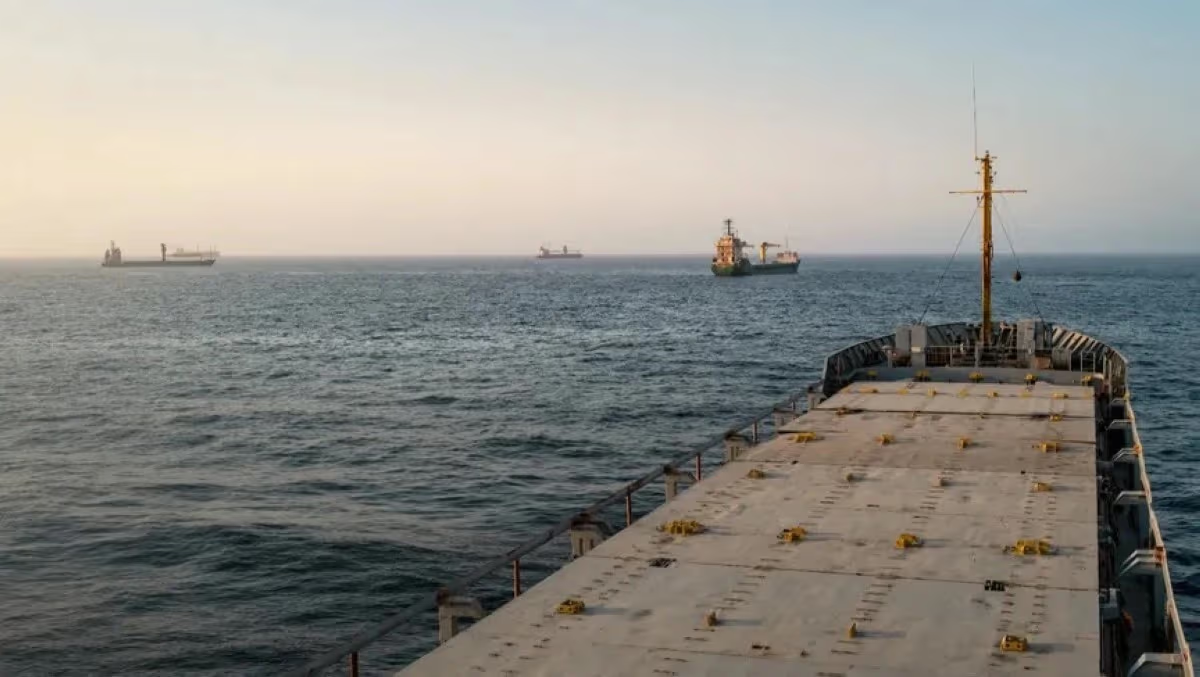
Tehran, Iran – Amid escalating military tensions and tit-for-tat strikes between the United States and Iran, the Strait of Hormuz – the world’s most important energy shipping lane – has seen a sharp decline in maritime traffic. Shipping traffic has reached its lowest level in more than five weeks.
Reuters reported on Monday morning, July 13, 2026, that heightened security concerns and ongoing attacks on ships in the region have prompted shipping companies to significantly reduce transit operations. A state of heightened anticipation and extreme caution prevails.
Tracking data reveals a record low
According to data from Kpler, a company specializing in ship tracking, only six vessels were observed transiting the Strait of Hormuz last Sunday. This figure reflects the severity of the current situation for global supply chains.
The data showed that the vessels departing the strait included the supertanker Humanity, carrying two million barrels of Iranian oil, and the tanker Capitan Andreas, carrying approximately 500,000 barrels of Kuwaiti petroleum products. Meanwhile, only three empty tankers entered the Arabian Gulf for loading.
Navigation is shrouded in mystery: routes are hidden.
As a precautionary measure against direct threats, reports indicated that most oil tankers still operating in the region deliberately switched off their Automatic Identification System (AIS) transponders while transiting the strait. This was done to avoid being directly targeted or monitored by the warring parties.
Gas shipments disappear and exports are affected
In a clear sign of disruptions to global energy flows, tracking data revealed that no liquefied natural gas (LNG) tankers entered the Strait of Hormuz over the weekend. This reinforces concerns about supply shortages in global markets.
The data also showed that an oil tanker belonging to the Abu Dhabi National Oil Company (ADNOC) departed between July 9 and 10. The tanker headed towards the port of Dahej in India, in one of the few recorded movements.
This marked decline in traffic through the Strait of Hormuz is not merely a technical statistic. It reflects a dangerous shift in the regional security environment, where crossing the strait has become a perilous undertaking. This situation is placing immense pressure on global energy prices and threatening the continued flow of vital supplies upon which major economies depend.