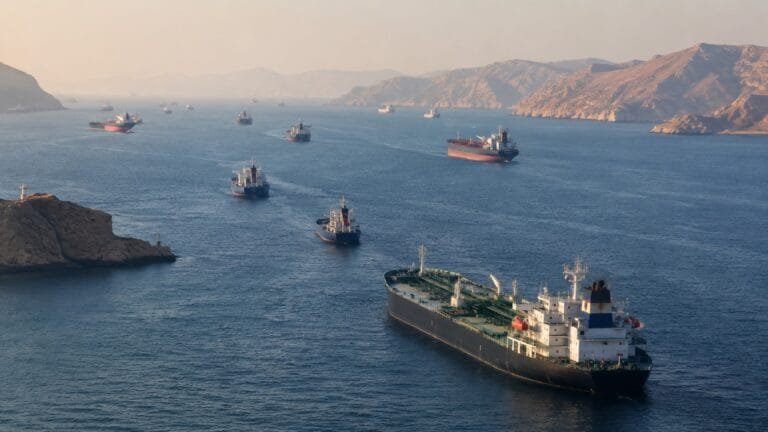
Tehran, Iran – Renewed hostilities between the United States and Iran have brought shipping traffic in the Strait of Hormuz to a near standstill. Bloomberg and the maritime intelligence firm Lloyds List Intelligence reported a sharp and unprecedented drop in vessel traffic on Thursday. Data indicated that the strategic waterway, which typically sees an average of 130 ships transiting daily, saw only five vessels pass through following the recent clashes. Furthermore, the passage of large tankers through routes previously coordinated by the United States has been almost entirely halted.
Large-scale US attack
This lull in maritime activity coincides with The New York Times’ revelation that the US Central Command (CENTCOM) conducted intensive airstrikes on Tuesday and Wednesday. These strikes targeted approximately 170 military sites within Iranian territory. This operation is considered the largest of its kind, representing a 15-fold increase in scale compared to the wave of attacks carried out in late June.
US Central Command (CENTCOM) explained that the strikes targeted advanced air defense systems and drone and missile depots. Additionally, critical logistical infrastructure on the Iranian coast was damaged. CENTCOM asserted that the objective was to “systematically degrade Iran’s ability to threaten international navigation.” CENTCOM also refuted Tehran’s claims that passage through the Strait of Hormuz is restricted to routes designated by Iran, calling them “false claims.” For its part, the US military confirmed that it has secured the passage of more than 800 ships and transported 380 million barrels of crude oil since May, thus defying Iranian attempts to assert its control.
Markets are on tenterhooks amid threats of a “blockade”.
Despite this heightened military tension, energy markets showed remarkable stability, with Brent crude remaining steady at around $76 a barrel in Friday’s trading. This is attributed to investors awaiting the next US move. While the US Central Command asserted that “Iran does not control the Strait,” Washington continues to weigh its options. Although the naval blockade previously lifted under the memorandum of understanding has not yet been reinstated, President Donald Trump hinted on Wednesday at the possibility of reimposing it as a punitive measure. Meanwhile, Iran is striving to maintain its presence in the waterway. The recent US escalation appears to have altered the dynamics of the situation, leaving the future of maritime traffic in the Gulf open to all possibilities.