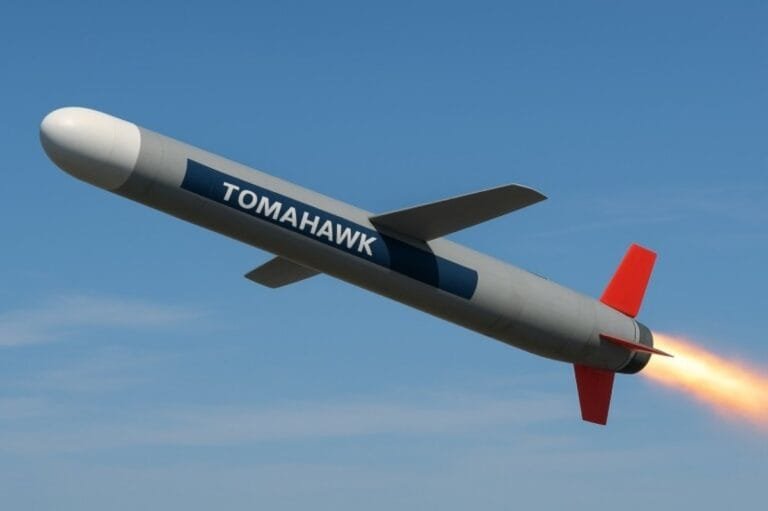
Berlin, Germany – In a strategic move aimed at bolstering Germany’s defense capabilities and closing what has been described as a “strategic gap” in its defense system, German Chancellor Friedrich Merz announced on Thursday that the United States has agreed to sell Tomahawk cruise missiles to Germany. Addressing parliament, Merz emphasized that this decision reflects a commitment to strengthening deterrence. He also stressed the importance of integrating these missile capabilities with efforts to develop joint European defense systems.
Strengthening European security and transatlantic cooperation
The German Chancellor praised the outcomes of the recent NATO summit in Ankara, describing it as successful and unifying, while also commending the leadership role of NATO Secretary General Mark Rutte. Merz further emphasized that Europe, in coordination with Canada, has become more aware of the need to assume greater responsibility for its own security. He referred to the principle: “Our security is our responsibility.”
As part of strengthening defense partnerships, Mertz pointed to a historic deal with Canada for the supply of 12 submarines from the German company TKMS, explaining that it is the largest arms contract in German history. He added that its economic value is expected to reach 100 billion euros, while creating thousands of jobs in the long term.
Tomahawk: A Strategic Deterrent Weapon
Tomahawk cruise missiles are among the most effective weapons in the U.S. arsenal, having proven their worth in numerous international military operations, making them a preferred choice for U.S. President Donald Trump. Despite growing global demand for these missiles, the U.S. Department of Defense faces challenges in increasing production rates. It is striving to reach its target of 1,000 missiles annually.
Berlin had submitted a formal request a year and a half ago to purchase these missiles and the Typhoon ground-based launch system, amid previous concerns about a slow US response. German Defense Minister Boris Pistorius had previously stated that Germany was actively seeking to acquire long-range strike capabilities, whether through purchasing ready-made systems or developing alternative European solutions, in light of rapidly evolving global security challenges.
This deal ends a period of anticipation in Berlin and underscores the depth of military coordination between Germany and the United States. It also opens the door to broader discussions about the future of European military manufacturing and the localization of defense technology to ensure sovereignty over security decisions within the continent in the face of current threats.