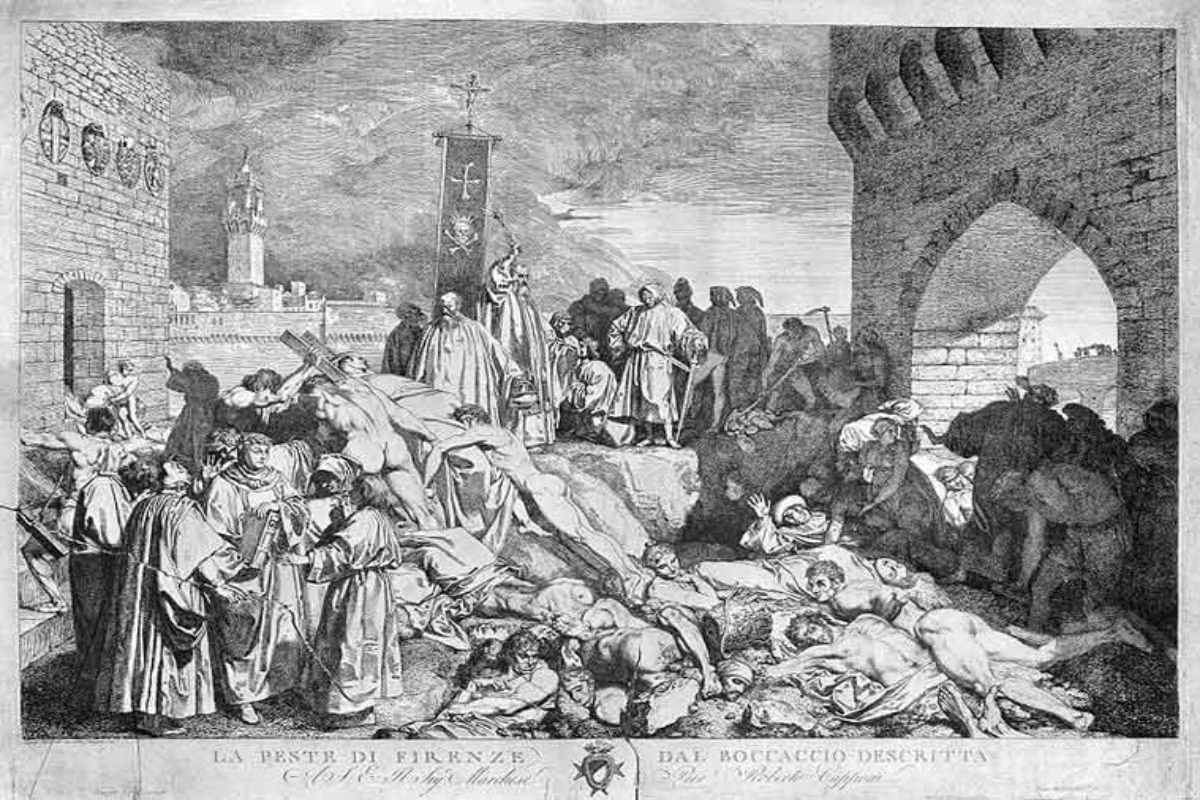
Cairo – Throughout history, pandemics have never been merely transient health crises affecting physical well-being before vanishing. Instead, they have functioned as major geopolitical turning points that reshaped the world’s political, economic, and social balances, directly dictating the rise of certain empires and the collapse of other
Dismantling Feudalism and Redistributing Wealth
From the medieval plagues that claimed millions of lives across Europe and Asia to the Spanish Flu that struck at the dawn of the twentieth century, pandemics have caused structural paralysis in societies by creating acute labor shortages and severe declines in production capacity. This economic disruption subsequently led to unanticipated outcomes, notably the redistribution of wealth and opportunities. Consequently, this accelerated the demise of obsolete feudal systems and fueled the emergence of the middle class, which ultimately transformed patterns of governance and administration due to the immense pressures placed on state institutions.
From the Coronavirus Pandemic to Contemporary Health Security
In the modern era, the COVID-19 pandemic exposed a clear fragility within global healthcare and economic frameworks. However, it simultaneously acted as a historical catalyst, accelerating the pace of digital transformation and the adoption of smart technologies across labor and educational sectors. This new reality has forced a comprehensive redefinition of national security worldwide, moving beyond purely military dimensions to establish health safety as a fundamental pillar for societal stability and continuity in 2026.
Sociological and historical experts assert that analyzing the outcomes of health disasters extends far beyond the strictly medical realm. It serves as a vital tool for understanding how the international system is forged, demonstrating how pivotal crises can become launching pads for the birth of new global orders—oscillating between resilience and turmoil depending on the capacity of governments to adapt and innovate.