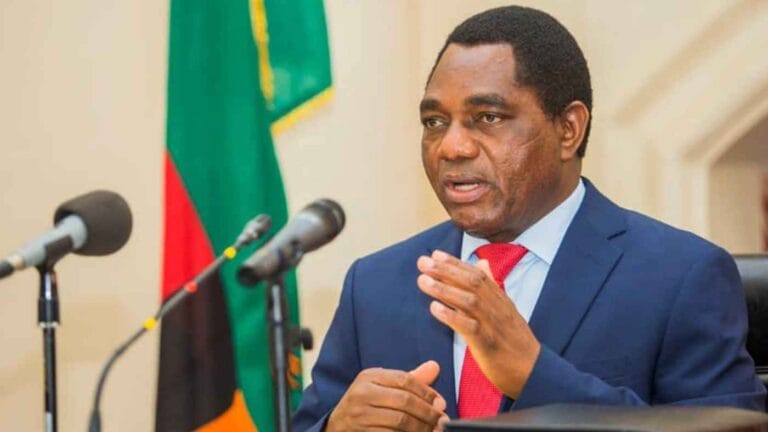
Lusaka, Zambia – Zambian President Hakainde Hichilema was sworn in for a second five-year term on Tuesday in the capital, Lusaka. The ceremony took place amid a tense political climate and protests from the opposition following a disputed election. In addition, his main political rivals were arrested in recent days on serious charges.
A resounding victory and stalled appeals
These ceremonies followed Hichilema’s landslide victory in the August 13th elections, where he garnered nearly 60% of the vote. His main rival, Brian Mondobell, received 38%. Mondobell has filed numerous objections and made outright accusations against the authorities of manipulating the results and falsifying the popular will. Despite the opposition’s attempts to legally challenge the results, the closure of the courts on the last day for filing appeals prevented any challenges from being submitted within the allotted timeframe.
For their part, European Union observers noted that polling day passed peacefully. However, the vote counting process was marred by some gaps. Observers recorded the failure of employees to write down the results immediately after they were announced. In addition, weak verification mechanisms were observed between paper records and digital inputs. In addition, the counting procedures were repeatedly halted pending instructions from the Electoral Commission headquarters.
Arrest campaign and security repercussions
On the security front, the days following the proposal saw a police raid on a property in Lusaka. This raid resulted in the death of a former minister and the arrest of opposition figures accused of plotting an armed uprising. However, the opposition categorically denied these allegations. After a period of hiding, Mondobele and his deputy, Makebe Zulu, were arrested by police and charged with treason late last week.
Economic challenges and past achievements
When he first came to power in 2021, the 64-year-old businessman inherited a collapsed economy and an inflation rate exceeding 24%. Furthermore, Zambia was struggling to repay its international debt. During his first term, Hichilema successfully restructured the debt and improved relations with foreign creditors. He also contributed to reducing inflation rates, although citizens continued to complain about the high cost of living and rising prices.