- Iran and Lebanon: A test of sovereignty
- Hezbollah’s weapons in the face of the state’s decision
- Washington and Israel are putting pressure on Beirut.
- Will the decision regarding weapons shift from Tehran to Beirut?
- Who will disarm them… and who will monitor them?
- Iran faces a new equation
- Hezbollah faces a different test
- The question that will decide the stage
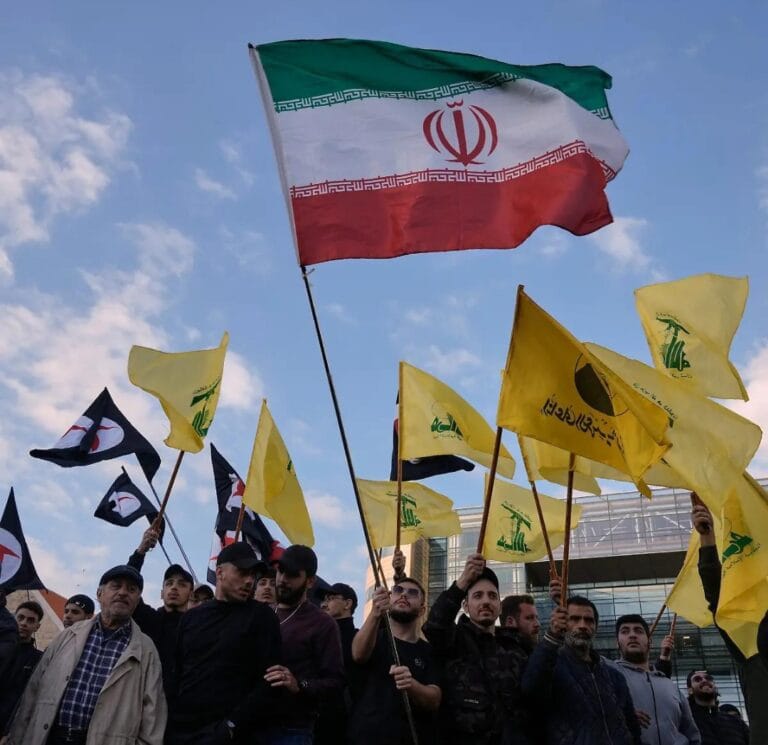
Abu Dhabi, UAE – With the escalating dispute between Beirut and Tehran over Hezbollah and its weapons, and the pressure from Washington and Israel to disarm the group, a new question arises: Has the Lebanese state begun to reclaim its political and military decision-making power from Iran? The question in Lebanon is no longer just: When will Hezbollah disarm? Rather, it has become: Who controls this weapon? Recent political developments between Beirut and Tehran, coinciding with American and Israeli pressure, are pushing the issue towards a greater test concerning the sovereignty of the Lebanese state.
Iran and Lebanon: A test of sovereignty
Relations between Beirut and Tehran have entered a more tense phase after the Lebanese government emphasized that all dealings with Lebanon must be conducted through its official institutions. This sent a clear political message that Lebanese decisions should not be made through channels outside the state. This coincided with escalating debate about the future of Iran’s relationship with Hezbollah. At the same time, Beirut is attempting to solidify its position as the official decision-maker on political and security matters.
Hezbollah’s weapons in the face of the state’s decision
The most significant shift is that the debate is no longer solely about weapons, but rather about who has the authority to use them. Washington demands that weapons be exclusively in the hands of the Lebanese state, while Hezbollah clings to its weapons and its role in confronting Israel. Here, the issue transcends the question of disarmament to a larger one: Can the Lebanese state monopolize the decision of war and peace?
Washington and Israel are putting pressure on Beirut.
The United States links the establishment of a secure and sovereign Lebanon to the disarmament of Hezbollah, while Israel links its withdrawal from southern Lebanon to the same issue. Thus, weapons have become a point of convergence for Lebanese, American, and Israeli interests. However, this external pressure presents Beirut with a complex dilemma: restoring state sovereignty without allowing the issue to escalate into open internal conflict.
Will the decision regarding weapons shift from Tehran to Beirut?
It cannot be said that this transition has actually taken place; Iran remains strategically linked to Hezbollah, and the party refuses to relinquish its weapons. However, what is new is that Beirut has become a direct party in determining the future of these weapons. Previously, the issue was primarily viewed through the lens of the relationship between Tehran and Hezbollah. And here lies the most crucial aspect: the next battle may not be about the number of missiles or the size of the arsenal, but rather about who has the power to use them.
Who will disarm them… and who will monitor them?
The Lebanese-Israeli negotiations also opened the door to discussing the participation of foreign countries in a mechanism to verify the disarmament of Hezbollah. This shifts the issue from a political dispute to a matter that can be monitored and verified. But this raises a new question: Will an international mechanism help Lebanon regain its sovereignty, or will it create a new level of foreign interference?
Iran faces a new equation
If Beirut succeeds in establishing a state monopoly on military decision-making, this will not necessarily mean the end of Iran’s relationship with Hezbollah. However, it could signify a shift in the nature of Iranian influence in Lebanon. Hezbollah could remain a powerful political force, while its ability to make military decisions independently of state institutions would be put to a real test.
Hezbollah faces a different test
For Hezbollah, the issue is not just about weapons, but about the future of its role within the Lebanese state. Relinquishing arms would redefine its relationship with the army, the government, and the political system. Maintaining them, however, would put it in direct confrontation with the demand for a state monopoly on the use of force. Therefore, the upcoming battle may be more about the party’s identity and role than about its stockpiles and arsenal.
The question that will decide the stage
So far, there are no indications that Tehran has lost its influence or that Hezbollah is no longer a factor. But there is a clear shift in the focus of the debate: Beirut wants to be the decision-maker on an issue long considered part of Iran’s sphere of influence in Lebanon. The real question then becomes: Who controls Lebanon’s decisions? If the state succeeds in asserting its authority, Hezbollah’s weapons could mark the beginning, not the end, of a redefinition of the relationship between Beirut and Tehran. If it fails, the old equation will remain: a state negotiating, a party possessing weapons, and Iran retaining its influence. The battle, therefore, is not just about Hezbollah’s weapons; it is about who has the power to use them.