Washington, DC – 240 days after his arrest, Delcy Rodríguez leads the transition, and Washington redraws the oil map. The opposition also seeks its role. On January 3, 2016, Nicolás Maduro was arrested and transferred to the United States. This ended the rule of the man who had led Venezuela since 2013, but Maduro’s downfall did not mean the collapse of the system he built. Nearly 240 days later, his former vice president, Delcy Rodríguez, leads the transition, while figures associated with the former regime remain in influential positions. Meanwhile, the government has begun a dialogue with the opposition regarding the country’s future. So the question is no longer: Where is Maduro? Instead, the question is: Who inherited the state he left behind?
Delcy Rodriguez… a move within the system
Ironically, the one leading the transition is not from the opposition, but rather Delcy Rodríguez, Maduro’s former vice president and oil minister. Thus, it appears that Venezuela has not fully transitioned from Maduroism to a new system. Instead, it has reshuffled the power centers within the state. Rodríguez is attempting to consolidate her authority while simultaneously negotiating with Washington and opening channels with the opposition. Ultimately, the nature of the future regime remains undecided.
Oil: The key to the new era
The bigger story revolves around oil. Venezuela possesses the world’s largest proven oil reserves, but its sector has suffered years of declining production, underinvestment, and sanctions. On August 28, US President Donald Trump announced an agreement granting American companies a controlling role in developing more than 65 billion barrels of Venezuelan oil reserves. There are also anticipated US investments approaching $100 billion, but this does not mean ownership of the oil will transfer to the United States. The Venezuelan government maintains its sovereignty over the resources, while the real issue lies in who controls the development, production, marketing, and revenue generation of the oil.
25-year agreement redraws the oil map
In the latest development, Rodríguez announced on August 30 that the US-Venezuelan agreement would extend for 25 years, aiming to develop 17 strategic oil fields and increase production to more than 1.5 million barrels per day, in addition to developing eight new fields. These figures reveal that what is happening is not merely a commercial deal, but a reshaping of the relationship between Washington and Caracas. Washington gains significant influence within the energy sector, while Venezuela needs investment and technology to rebuild its oil industry.
The opposition enters the equation
Meanwhile, the interim government and the opposition began talks about the future of the regime and preparations for upcoming elections. The equation became three-way: an interim government, Washington, and the opposition, with elements of Maduro’s network remaining in the background. Despite all these shifts, Venezuela has yet to hold elections to end the transition. Herein lies the paradox: the political transition preceded the democratic transition.
Maduro is behind bars… but he hasn’t disappeared.
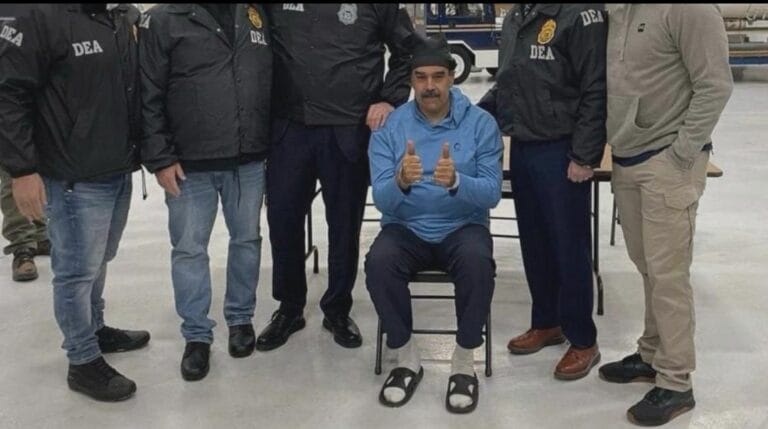
Despite being held in a Brooklyn detention center, Maduro remains a political and media presence. On August 30, photos of him inside the prison, dated June, were released, showing him smiling and flashing a victory sign, along with a message to his supporters and family. His trial in the United States is scheduled to begin in June 2027, after he and his wife pleaded not guilty. Thus, the prison has become the former president’s last remaining political platform.
Who inherited Venezuela?
The answer isn’t a single person. Delcy Rodríguez inherited the presidential palace, Washington expanded its influence in the oil sector, the opposition sought its share of the future, and parts of Maduro’s network remained within state institutions. In 240 days, the head of state changed, alliances were realigned, and the oil sector opened up to American investment, but electoral democracy remains unresolved. Therefore, Maduro’s fall doesn’t mean the battle for Venezuela is over. In fact, another battle has begun: Who controls the keys to the state that sits atop the oil?