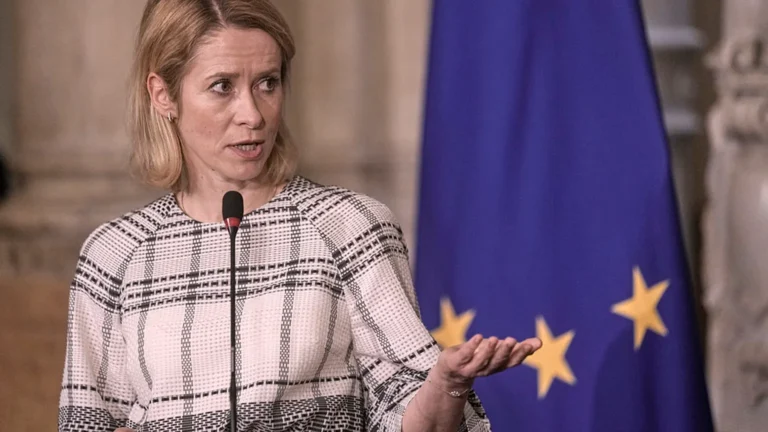
Brussels, Belgium – The EU’s foreign policy chief, Kaja Kallas, told the German daily Die Welt that the European Union intends to significantly expand sanctions against Russia in the coming months. This plan aims to tighten the economic and political noose around Moscow to halt its ongoing war in Ukraine.
Callas emphasized that the economic and financial sanctions imposed by the European Union have already exacted a heavy toll on Russia at all levels. She explained that these decisive measures have been highly effective in depriving the Russian war machine of more than one trillion euros, equivalent to approximately $1.16 trillion. This has directly impacted Russia’s ability to sustain military operations.
Record expansion in targeted entities
In a related development, the EU’s foreign policy chief revealed her intention to take concrete steps soon, stating, “This fall, I will present the broadest and most comprehensive sanctions lists since the start of the war.” She added, emphasizing the anticipated impact of this package, “Once adopted and formally agreed upon, these sanctions will immediately and directly increase the total number of Russian entities subject to EU sanctions by a third.”
Callas stressed the need to maintain the pressure. She also reiterated her firm conviction that international and institutional pressure must continue to mount until Moscow makes the genuine decision to end its war and stop the bloodshed in Ukraine. Despite these strong statements, Kaya Callas did not provide further specific details or timelines regarding the timing of the new package or the sectors it would target.
Background of ongoing European sanctions
This anticipated diplomatic and economic escalation comes after the European Union approved its latest round of sanctions against Russia last July in response to its ongoing war in Ukraine. That package included imposing stricter and additional restrictions on the Russian banking sector and cryptocurrency networks operating in the country. This is part of a continued effort to close financial loopholes and prevent Moscow from circumventing international sanctions imposed since the start of the crisis.