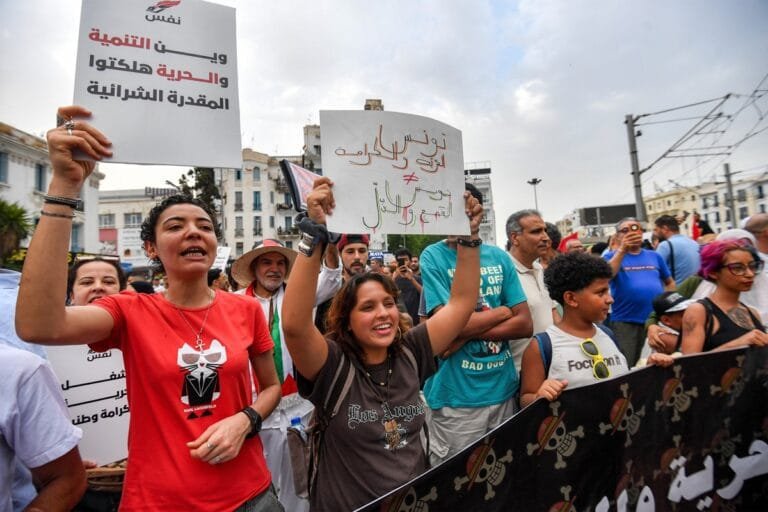
Tunis – The Tunisian youth movement “Generation Z” has launched an official document entitled “An Open National Petition: A Call to Save the Republic.” It is addressed to the great Tunisian people and all active forces and free national consciences. The Generation Z petition includes a firm demand for the resignation of President Kais Saied and the holding of early presidential and parliamentary elections. This comes amidst an unprecedented escalation of structural crises in the country.
First: Reasons for withdrawing confidence and diagnosing the abject failure
In the preamble to the document, the signatories affirmed that their action stemmed from a sense of historical and national responsibility towards future generations. It also came in response to the accelerating deterioration of the state’s foundations and the deepening economic, social, and political crises. They declared their complete withdrawal of confidence from President Kais Saied. Furthermore, they demanded his peaceful resignation. Their aim is to prevent the country from descending into chaos and uncertainty.
The Generation Z petition outlined the grounds for the vote of no confidence in eight key points:
Monopolizing power and squandering a historic opportunity: Since the consolidation of absolute power in 2021 and the exercise of unchecked, absolute authority, a historic opportunity to dismantle corruption networks and reform the state has been squandered. As a result, this has led to a one-man rule devoid of vision and development programs. The petition asserted that the persistent recourse to escapism and the reduction of structural crises to the scapegoat of “monopoly” and the illusion of “conspiracies” continues. Meanwhile, the suffering of the people during crises and disasters is ignored.
It also denounced the closing of the door to dialogue, and the shackles of civil society and trade union work. In addition, he turned the judiciary into a tool for liquidating political opponents and imprisoning those with opinions. It also returned Tunisia to the box of fear and self-censorship. Further, it replaced standards of competence and experience with absolute loyalty and personal flattery. Tunisia’s youth and talent were marginalized, leading to catastrophic administrative paralysis. Zed’s tricks also led to Kais Saied plunging the country into isolation and economic hardship under the slogans of “self-reliance.” As a result, the foundations of development and the future of young people were neglected.
The petition called on Kais Saied to apply his well-known political and ethical principle of “withdrawing confidence from any official who fails to manage their responsibilities” to himself. This came after the proven failure of his policies. The petition argued that his reliance on misleading rhetoric to sell illusions and cover up shortcomings was evident in his reneging on development and environmental promises (such as the Gabes crisis and the tragedy of the residents of Zarzis). This failure was also demonstrated by his abject inability to address the unemployment crisis. The petition accused Saied of squandering public funds on frivolous projects. For example, he diverted available state resources to finance failed personal ventures and experiments that have proven fruitless. Among these projects are the “private companies” that drain funding. In addition, there is the “Council of Regions and Provinces,” which represents an additional financial burden to satisfy the president’s political fantasies.
Second: The national exit strategy and the demands of the petition
The signatories emphasized that “democracy is reformed by democracy,” and that overcoming the comprehensive crisis cannot be achieved through chaos or by transitioning from one autocratic regime to another. Rather, it requires restoring power to the rule of law and the state to its citizens. Accordingly, the petition raised the following demands: the resignation of President Kais Saied to halt the self-destructive trajectory of state institutions. It also calls for an immediate return to the ballot box through early elections to renew national legitimacy. Third, it requires the empowerment of national talents and youth to lead the reform process, free from populism and narrow loyalties.
In closing, the “Generation Z Tunisia” initiative categorically affirmed that the privacy of signatories is fully guaranteed. It emphasized that identity and personal data will not be published or shared. This is in adherence to its commitment to absolute confidentiality and respect for the privacy of every citizen who chose to sign the petition.