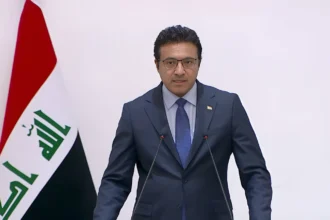

Beirut, Lebanon – Lebanese Foreign Minister Youssef Raji, in a phone call today with his Egyptian counterpart, Badr Abdel-Aty, affirmed Lebanon’s full commitment to completing the ongoing negotiation process in a way that guarantees the complete preservation of national sovereignty and safeguards all legitimate Lebanese rights in light of current challenges. The two ministers also discussed the overall situation in the Middle East. Furthermore, they reviewed the most prominent and rapidly unfolding geopolitical developments on the regional and international stages. These developments could have repercussions. In addition, they pose potential risks to regional stability and peace in the region.
Updates on the course of negotiations with Israel
The two ministers discussed at length the ongoing negotiations between Lebanon and Israel. Minister Youssef Raji reviewed the latest developments and issues related to this negotiating framework. The Lebanese diplomat emphasized Lebanon’s commitment to continuing the negotiation process with utmost care. He stressed that this must be done in a way that safeguards the country’s national sovereignty and preserves Lebanon’s rights to its resources and assets. He clarified that this must be achieved without any compromise. Furthermore, there should be no concession on national principles.
Preparations for the Arab League Ministerial Meeting
On the Arab diplomatic front, the telephone call between the Lebanese and Egyptian foreign ministers addressed the ongoing and intensive preparations for the upcoming ministerial meeting of the League of Arab States. The meeting is scheduled to be held in the Egyptian capital, Cairo, next September. During the discussion, both sides agreed on the importance and necessity of continuous and ongoing bilateral coordination between Beirut and Cairo in this regard. They also emphasized that this coordination is crucial for this important Arab event. Notably, it is taking place under extremely delicate and sensitive regional circumstances. These circumstances necessitate strengthening the unity of the Arab position. Moreover, they require intensifying effective consultation and coordination among all member states in order to confront shared crises and challenges.