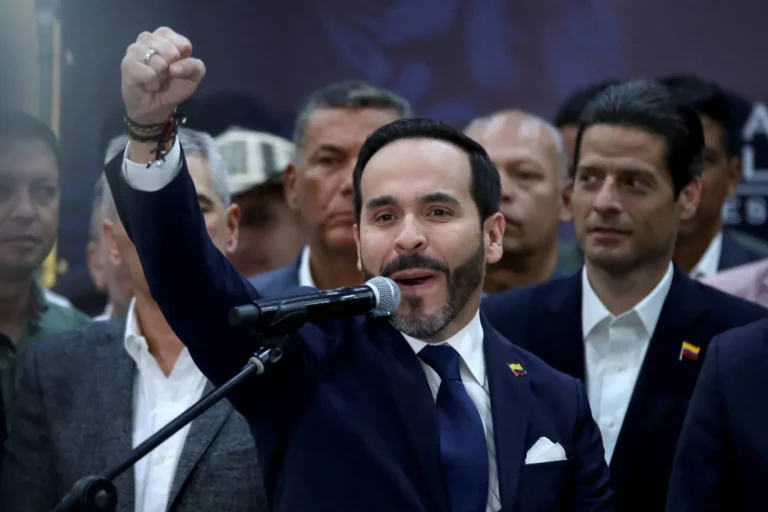
Bogotá, Colombia – Colombian President-elect Abelardo de la Espírito Santo, backed by the United States, has declared his firm intention to sever diplomatic relations with both Cuba and Nicaragua immediately upon assuming office. This move is part of a series of escalating measures the hardline right-wing president plans to implement after taking office on August 7.
In statements reported by Agence France-Presse, de la Esperría confirmed through his official social media accounts that “there will not be any relations with authoritarian regimes in my government,” explaining that the decision to sever diplomatic relations in its first phase will be limited to these two countries, in a step that reflects a radical shift in Colombian foreign policy.
Background to the elections and tensions with the previous administration
It is worth noting that Abelardo de la Esperilla won by a very narrow margin in the last presidential election, during which he received explicit and direct support from US President Donald Trump throughout his campaign. Conversely, the historically close relationship between Colombia and the United States has experienced unprecedented tensions since the start of Trump’s second term, due to the ongoing and frequent clashes between him and the outgoing leftist president, Gustavo Petro.
In a related development, Petro accused his successor of receiving direct instructions and orders from the US State Department, strongly criticizing what he called the “blatant interference” by US President Trump in Colombian politics in support of de la Esperilla. Regionally, the Nicaraguan parliament and electoral commission are moving toward approving political reforms that would completely exclude opposition forces from upcoming elections, at the behest of President Daniel Ortega, who has been in power since 2007—a move that has drawn sharp condemnation from Washington. Meanwhile, on the Cuban front, relations with the United States have deteriorated significantly amid repeated US threats to seize control of the island.
Reduction of diplomatic missions and fundamental changes
In addition to severing ties with Havana and Managua, the Colombian president-elect unveiled a comprehensive plan to close 15 consulates and 14 embassies worldwide. Bogotá was instructed to close its diplomatic missions in several countries, including Algeria, Haiti, Barbados, Hungary, Senegal, Ethiopia, and South Africa, as well as to merge embassies in other countries such as France and Italy. De la Espería justified these radical changes as necessary to streamline the budget and free up public funds to increase allocations to the internal security sector.
On the Arab and Palestinian front, the president-elect intends to reopen a Colombian diplomatic mission in Jerusalem, while simultaneously suspending the project to establish an official Colombian embassy in the Palestinian territories. This diplomatic initiative was launched during the term of his leftist predecessor, Gustavo Petro, reflecting a completely new foreign policy direction for Colombia.