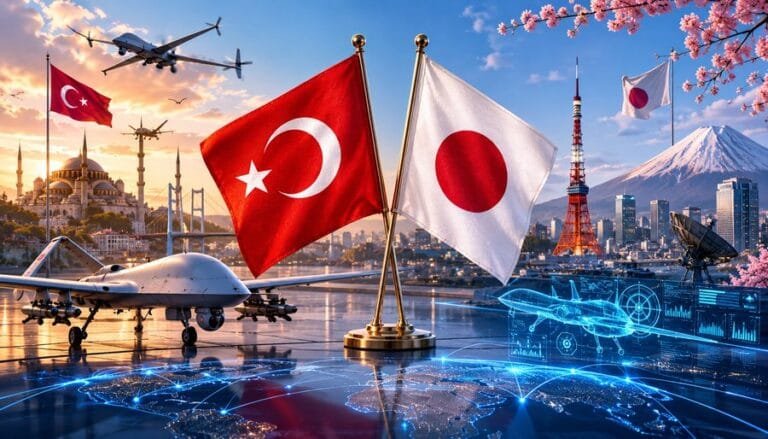
Ankara, Turkey – The Turkish capital, Ankara, is preparing to host the NATO summit on July 7 and 8. The summit will be held with high-level international participation. In this context, the Japanese government announced a plan for a high-level delegation, including Foreign Minister Toshimitsu Motegi and Defense Minister Shinjiro Koizumi, to visit Ankara from Monday to Thursday. The delegation will participate in the summit events.
The Japanese government obtained approval for the visit from the Rules and Administration Committee of the House of Councillors (the upper house of parliament). Tokyo had initially considered the possibility of Prime Minister Sanae Takaichi attending, but parliamentary commitments prevented this. Therefore, this will be the second consecutive year that the Japanese prime minister has been absent from these meetings, following Shigeru Ishiba’s absence last year.
Strengthening security cooperation
The participation of Motegi and Koizumi in the summit is part of Japan’s efforts to coordinate positions with NATO on current international issues. The two ministers are scheduled to hold a series of meetings with NATO officials. During these meetings, they will exchange views on the situation in Ukraine and tensions related to Iran. In this regard, Japan emphasizes its deep understanding of the interconnectedness of security in the Euro-Atlantic and Indo-Pacific regions. It also expresses its hope for enhanced international cooperation to counter China’s growing influence in the region.
A summit amidst the shadows of uncertainty
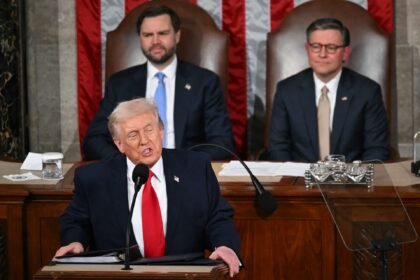
The summit is taking place at a highly sensitive time, bringing together the leaders of the 32 member states, most notably US President Donald Trump. Trump’s recent statements regarding his threats to withdraw from the alliance or reduce US forces have cast a shadow of uncertainty over the future of the military bloc. This has prompted allies to seek new arrangements for burden-sharing and ensuring the continuity of their defense unity.
Extraordinary security measures in Ankara
Domestically, Turkish authorities have implemented unprecedented security measures in preparation for the arrival of international delegations. Tens of thousands of police officers have been deployed, and air defense systems have been placed on high alert to protect the summit. The measures also include bans on public gatherings and the imposition of strict restrictions. These steps have sparked widespread controversy among human rights groups. However, the Turkish government justifies them as necessary to secure this important international event and emphasizes the importance of demonstrating the country’s readiness to host the NATO leaders.
The summit is expected to issue a final statement reaffirming the commitment to the principle of collective defense. It will also focus on supporting Ukraine and addressing Iranian nuclear threats. This is seen as an attempt to reassure allies of NATO’s continued cohesion despite the geopolitical and internal challenges facing some of its key members.