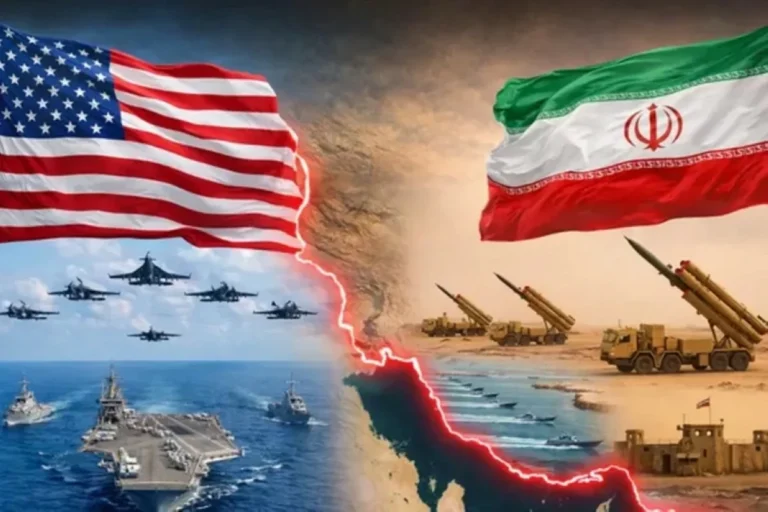
Tehran, Iran – The Persian Gulf region entered a new and dangerous phase of tension early Sunday morning, as the US military and Iran’s Revolutionary Guard exchanged heavy military strikes. This comes amid international concerns about a complete collapse of the ceasefire agreement and the fragility of the truce in strategic shipping lanes.
US airstrikes against Iranian sites
U.S. Central Command (CENTCOM) announced in an official statement and video released via the X platform that U.S. Navy and Air Force fighter jets conducted precision strikes targeting 10 strategic Iranian military sites in and around the Strait of Hormuz. CENTCOM explained that these operations were a direct response to an Iranian drone attack on the Panamanian-flagged oil tanker MT Kiko, which was transiting the strait carrying more than two million barrels of crude oil.
Iranian retaliation targets Kuwait and Bahrain
In response, the Iranian Revolutionary Guard Corps (IRGC) announced in a statement issued by its public relations department that it had carried out a joint operation early Sunday morning. The operation involved the launch of ballistic missiles and drones between 2:00 and 3:00 AM. The statement claimed that the attacks targeted eight US military sites at Ali Al Salem Air Base in Kuwait. Additionally, the attacks targeted the headquarters of the US Fifth Fleet at Mina Salman Port in Bahrain.
The Kuwaiti military confirmed that its air defenses intercepted hostile targets, explaining that the sounds of explosions heard in the country were due to the interception of these attacks. The Bahraini Ministry of Interior also urged citizens to remain calm and seek shelter after air raid sirens sounded across the country.
Trump’s statements: The threat of military action
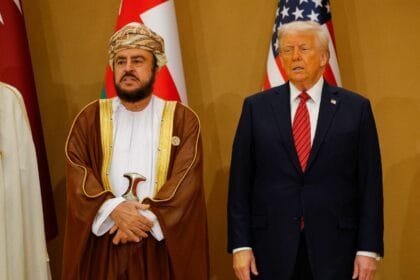
On the political front, US President Donald Trump reiterated his opposition to Tehran acquiring nuclear weapons. In a post on his platform, Truth Social, he emphasized that “Iran will never have a nuclear weapon.” This came in response to what he described as lies contained in the book “Regime Change: Inside the Imperial Presidency of Donald Trump.”
Regarding developments on the ground, Trump confirmed that US aircraft had destroyed missile depots, drones, and coastal radar sites. He again raised the possibility of military action, saying, “There may come a time when we can no longer be rational and we have to finish what we started successfully militarily. If that happens, the Islamic Republic of Iran will cease to exist.”
Collapse of the diplomatic track
This escalation represents a severe blow to regional de-escalation efforts. The Revolutionary Guard, in its statement, considered the US strikes a blatant violation of Article 1 of the Islamabad Memorandum. It also threatened to completely halt technical talks and negotiations with Washington.
The Revolutionary Guard reiterated its position that controlling maritime traffic in the Strait of Hormuz falls under its jurisdiction, vowing to deal more harshly with any vessels it deems to be in violation. As the military alert continues, the international community is watching closely the repercussions of this “bloody day” on global energy security and the future of stability in the Gulf region. The region is now living under the threat of open war.