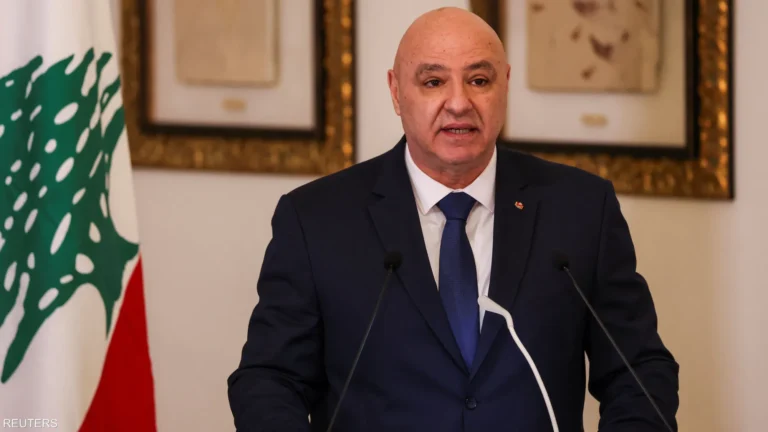
Beirut, Lebanon – Lebanese President Joseph Aoun welcomed on Friday the initiative launched by France and Italy to form a multinational coalition. This coalition would assume responsibilities in southern Lebanon following the expiration of the mandate of the United Nations Interim Force in Lebanon (UNIFIL) at the end of this year.
Support for the sovereignty and stability of the South
In an official statement issued by the Presidency, President Aoun affirmed that this initiative is “a sincere expression of the international commitment to supporting Lebanon’s sovereignty and stability.”
He also emphasized its importance in recognizing the role of the Lebanese Armed Forces, which are striving to strengthen their security grip and extend state authority over all Lebanese territory, particularly in the southern border regions that are experiencing ongoing tensions.
A European vision for the post-UNIFIL era
This move comes after intensive talks between French President Emmanuel Macron and Italian Prime Minister Giorgia Meloni. Both expressed their desire to launch an international coalition to ensure that no “security vacuum” is left after the departure of UNIFIL forces. Macron emphasized that the primary objective is to strengthen Lebanon’s sovereignty. He also stressed the need to prevent its territory from becoming a base for regional escalation, in full coordination with the European Union and the United Nations.
Challenges of the international situation
While the European axis is pursuing this alliance, the international vision remains divided. UN Secretary-General António Guterres has already proposed maintaining a UN military presence, with options ranging from 2,000 to 5,500 troops, to support the Lebanese army. This proposal is expected to face strong opposition from the United States and Israel.
Future of operations in the South
It is worth noting that UNIFIL, currently comprising some 7,500 troops from 50 countries (France being a prominent contributor), has been deployed in southern Lebanon since 1978. Despite this long-standing presence, past experiences have demonstrated the force’s inability to prevent the recurring conflicts between Israel and Hezbollah.
Consequently, Lebanon seeks, through any new international framework, to genuinely strengthen the capabilities of its armed forces. It aims to ensure the preservation of its territorial integrity and to prevent its country from becoming an arena for regional rivalries. This presents a significant challenge given the complex political landscape in the region.