Athens, Greece – In a strategic move aimed at strengthening regional security and developing military capabilities, Greece has officially announced its accession to the EU SAFE (Security Action for Europe) funding program.
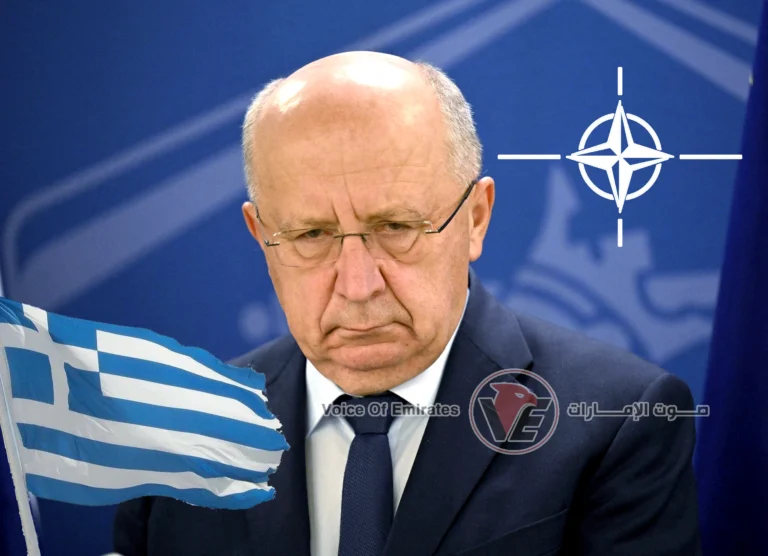
The announcement was made by the EU Commissioner for Defence and Space,
Andrios Komplios, who confirmed the signing of the agreement with Athens.
He described this step as a pivotal achievement in the path toward strengthening common European security.
Strategic support and defense development pillars
This step comes as part of the EU efforts to enhance the capabilities of
its member states in confronting growing security challenges.
This is particularly evident in the Mediterranean region,
which is undergoing delicate geopolitical shifts.
This program is set to provide funding and advanced technologies.
This will help Greece modernize its defense arsenal and improve its readiness in vital and sensitive areas.
Under this agreement, Greece will invest in three key areas aimed
at securing its borders and monitoring its strategic interests more effectively.
This will be achieved by strengthening reconnaissance capabilities
and radar systems to ensure comprehensive monitoring of maritime and airspace.
It also includes upgrading military communication systems to ensure the exchange of information
and data in an encrypted manner, protected against any technical breaches.
Furthermore, it involves investing in advanced systems for detecting and countering drones,
a challenge that has become a priority in modern warfare and the protection of strategic installations.
Strengthening European coordination
Athens’ signing of this agreement demonstrates its commitment to strengthening military cooperation within the European framework.
The SAFE program aims to create an interconnected defense infrastructure among EU member states.
This step will give Greece a significant advantage in managing defense and security matters.
This impact extends beyond the national level, positioning it as
an active partner in protecting the EU southern borders.
This approach reflects the EU’s clear desire to transform “security action for Europe” from a mere concept into a tangible reality.
This is achieved by providing member states with the necessary technological
and financial tools to safeguard their sovereignty and counter the rapidly evolving threats of the digital age.
As a result, the Mediterranean will become a more stable region thanks
to advanced technological defense capabilities and cross-border coordination.