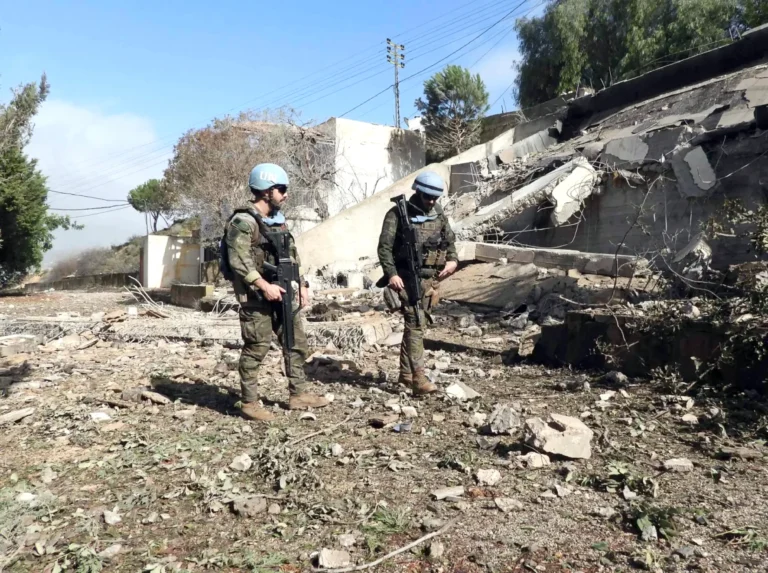
Tyre, Lebanon – Saturday evening witnessed a significant military escalation on the southern Lebanese front, as Israeli forces began advanced ground operations toward the town of Majdal Zoun in the Tyre district.
This move represents an expansion of the scope of ground operations.
These developments come as direct clashes continue between the Israeli army and Hezbollah fighters.
Meanwhile, tensions on the ground are rising.
Ground movements and military responses
Hezbollah, in separate statements, confirmed monitoring the Israeli advance towards Majdal Zoun.
It also indicated that it countered these movements by targeting concentrations of advancing forces in the vicinity of the town.
The party’s operations did not stop there. It announced a qualitative attack targeting a gathering of
Israeli enemy soldiers on the outskirts of Kfar Tebnit in the Nabatieh district, using two attack drones.
The party also announced an intense rocket bombardment targeting an Israeli military position in the town of Maroun al-Ras.
Meanwhile, the situation on the Kfar Tebnit front was not one-sided. Arab media reports indicated
that Israeli warplanes carried out a heavy airstrike targeting the town. This was in response to the attacks on its forces.
These exchanges of fire are part of a “tit-for-tat” strategy, which has expanded in recent days to include new areas deep inside southern Lebanon.
Tel Aviv’s positions and the expansion of its regional strategy
This escalation on the ground coincides with a firm political and military stance from the official level in Tel Aviv.
Israeli Defense Minister Yisrael Katz affirmed on Friday Israel’s commitment to maintaining
its forces in what it calls “security” zones in Lebanon, Syria, and Gaza.
He also stressed that any withdrawal is not on the table at this stage.
Katz’s statements were not limited to the open fronts. He also linked the military operations to the regional strategy toward Iran.
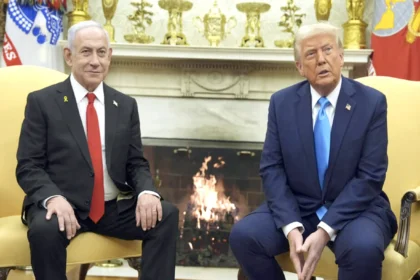
Katz indicated that, in coordination with Prime Minister Benjamin Netanyahu,
he had issued strict instructions to the army to prepare to prevent Tehran from acquiring nuclear weapons.
The Israeli minister emphasized the importance of “acting independently” to achieve this goal.
He also expressed Tel Aviv’s hope that US President Donald Trump would adopt a firm stance toward the Iranian nuclear program,
ballistic missile development, and curbing the influence of Tehran’s proxies in the region.