The Arabian Gulf – The Arabian Gulf region has witnessed a dangerous military escalation and a direct confrontation between US forces and the Iranian Revolutionary Guard. This has included airstrikes and missile interceptions. Simultaneously, there are conflicting reports and an intense media war regarding the nature of the casualties. Furthermore, questions have arisen about the objectives of the tit-for-tat attacks in the region’s vital waterways.
A drone attack in Kuwait was thwarted, and the Iranian narrative was refuted.
U.S. Central Command (CENTCOM) announced that an additional wave of Iranian drones attempting to target U.S. forces stationed in Kuwait failed to hit their targets.
CENTCOM explained in an official statement that its air defense systems successfully shot down several drones. It also confirmed that no U.S. personnel or assets were harmed.
In the same context, the U.S. command refuted claims by the Iranian Revolutionary Guard Corps (IRGC) regarding attacks on the U.S. Fifth Fleet headquarters in Bahrain and an airbase in the region. It described these claims as false and affirmed that all Iranian attacks failed due to the vigilance of U.S. forces. Furthermore, it emphasized its readiness to defend itself against any aggression.
Preemptive strikes on Qeshm Island
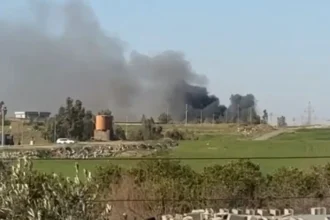
On the ground, CENTCOM confirmed that its forces destroyed several Iranian ballistic missiles and drones on June 2. A ground-based military control station on Qeshm Island was also destroyed.
These strikes came in response to Tehran’s attempts to carry out attacks in various parts of the Middle East. The US statement added that Tehran launched ballistic missiles toward neighboring countries, but they failed to hit their targets and caused no injuries among US troops.
In response, the Islamic Revolutionary Guard Corps (IRGC) stated that its naval forces targeted a US airbase, a helicopter, and the headquarters of the Fifth Fleet. This was done with missile and drone attacks in retaliation for Washington’s destruction of an IRGC communications tower south of Qeshm Island.
Tanker war escalates in the Strait of Hormuz
The confrontation was not limited to military bases but extended to strategic shipping lanes. The US statement indicated that the US military targeted an Iranian oil tanker near the Strait of Hormuz with an air-launched missile, damaging its engine room.
In response to this attack, which Tehran considered a violation of the Strait’s rules, the Islamic Revolutionary Guard Corps Navy announced it had targeted a commercial vessel named “Panaya” with naval missiles. It also claimed the ship was owned by American and Israeli entities. This strategic development further heightens international concern regarding maritime security and the free flow of global energy supplies through the Strait of Hormuz.