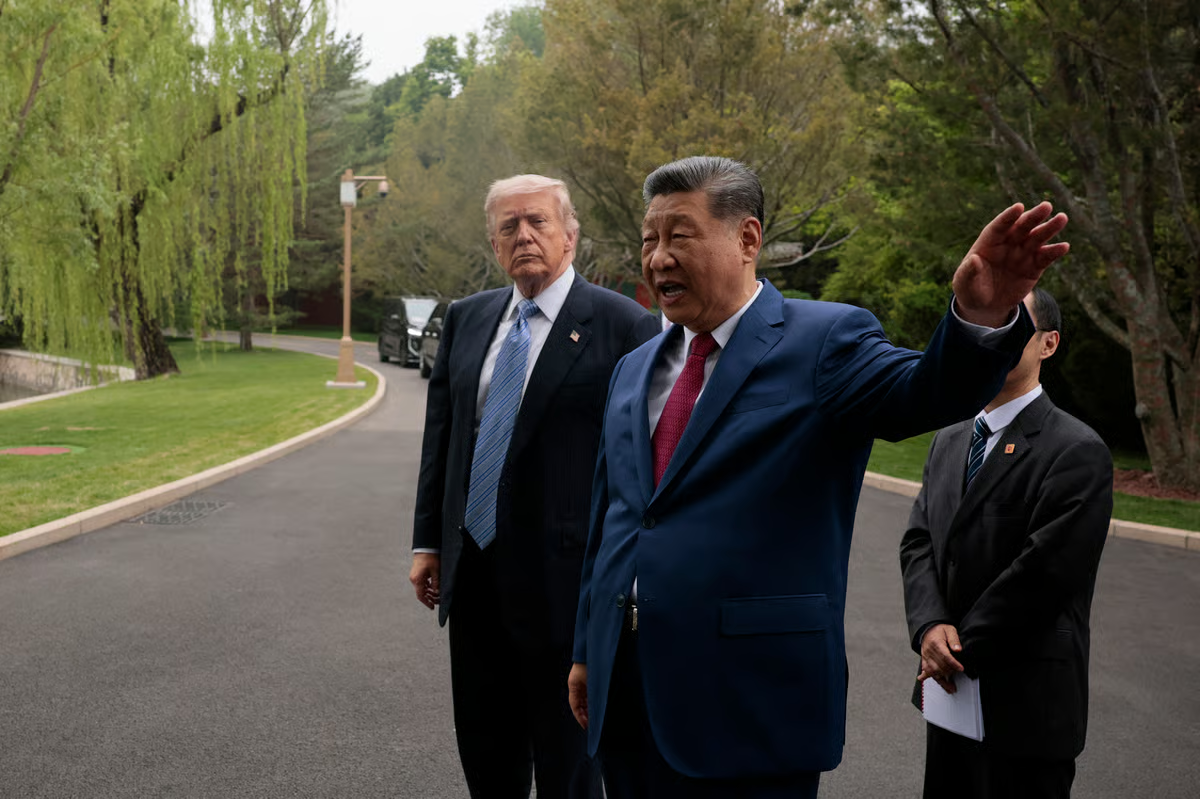
Beijing, China – In an unexpected development that revealed the extent of hidden geopolitical tensions, international media reports indicated that Chinese President Xi Jinping displayed unprecedented anger during his recent summit with US President Donald Trump in Beijing, where he vented his fury on Japan’s defense policies.
Xi’s outburst unsettles the American delegation
The Financial Times, citing informed sources, reported that the Chinese president raised his voice and appeared visibly agitated during his sharp criticism of Japanese Prime Minister Sana Takaichi.
US officials were surprised by the raising of this issue, which had not been included in the summit’s preparatory discussions, creating a tense moment in the meeting room.
While Xi Jinping strongly criticized Japan’s increased defense spending, President Trump’s response differed from Chinese expectations. He emphasized the need for Tokyo to adopt a more proactive stance on security, citing the growing threats posed by North Korea. However, observers point out that Japan’s real security concerns extend beyond Pyongyang and center on “aggressive China,” placing Beijing in a diplomatic bind.
“Lack of self-awareness”
For his part, Christopher Johnston, former director for East Asian affairs at the U.S. National Security Council, criticized the Chinese president’s stance, describing it as a “stunning lack of self-awareness.”
Johnston asserted that China’s anti-Japanese actions are counterproductive, pushing Tokyo to strengthen its security alliances with Australia, the Philippines, and South Korea. He emphasized that these countries now view China as a “greater strategic challenge” than any concerns about Japan’s rearmament.
The arms race and the dispute over Taiwan
Relations between Tokyo and Beijing have deteriorated rapidly since Prime Minister Takeichi’s remarks describing a potential Chinese attack on Taiwan as an “existential threat” to Japan, and asserting her country’s readiness to intervene.
Since then, China has launched a broad campaign of criticism, accusing Tokyo of “slipping into neo-militarism,” while ignoring the vast disparity in defense budgets; China allocates more than $336 billion to military spending annually, while Japan allocates only about $62 billion.
Washington’s balanced stance
Despite speculation about Trump’s stance on Takaichi’s earlier remarks, US officials confirmed that Trump expressed “deep respect” for Japan and a close personal relationship with its prime minister during the summit.
The US delegation emphasized to the Chinese side the importance of the US-Japan alliance, noting the large US military presence in the Japanese archipelago.
While the Chinese Foreign Ministry denied the accuracy of the Financial Times reports, demanding that Tokyo “stop its reckless pursuit of rearmament,” analysts believe that this verbal clash in Beijing reflects the depth of the strategic rift in East Asia, and confirms that Japan is no longer content with its traditional role, but has become a pivotal player in the balance of power equation led by the United States in the face of expanding Chinese influence.