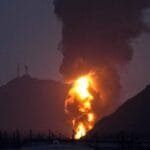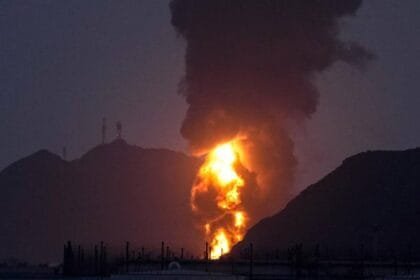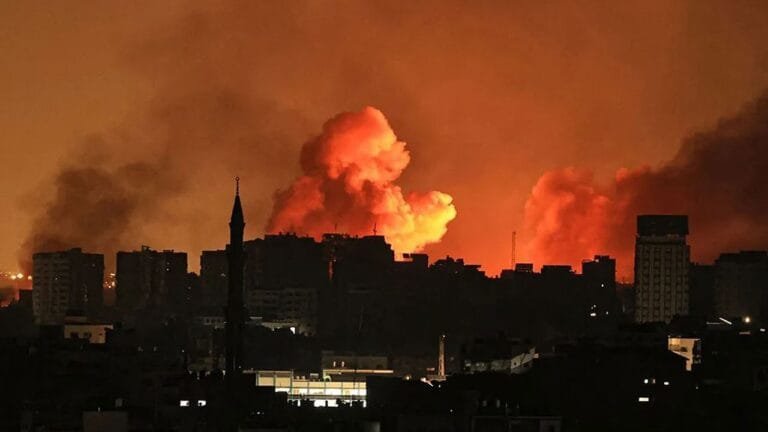
Iranian state media and local eyewitnesses reported on Friday evening that a series of powerful explosions shook the southern coastal city of Bandar Abbas. The loud blasts triggered widespread anxiety and speculation across the region, while Iranian government officials and Islamic Revolutionary Guard Corps (IRGC) commanders have yet to issue an official statement clarifying the nature, cause, or exact location of the detonations, leaving the extent of potential casualties or structural damage unconfirmed.
Severe Ambiguity and Anticipation of Official Disclosures
A thick cloud of ambiguity surrounds the precise circumstances of the incident, as local authorities in the Hormozgan province have temporarily refrained from delivering immediate press updates. Security forces and civil defense units have not released any data regarding material or human losses, though local reports indicate an immediate deployment of emergency response vehicles toward vital zones. International observers and regional analysts are closely waiting for initial official disclosures to determine whether the blasts stemmed from technical industrial accidents or external military strikes.
The Geopolitical and Military Weight of Bandar Abbas
Bandar Abbas holds immense strategic and military significance within Iran’s defensive architecture due to its direct geographic oversight of the crucial Strait of Hormuz, a vital maritime chokepoint for global oil and gas transit. The coastal hub serves as the operational headquarters for the Iranian Navy and the IRGC naval wing, alongside hosting extensive commercial ports, critical shipping shipyards, and major oil refining facilities, making any security breach within its perimeter a matter of global economic concern.
Accelerating Geopolitical Volatility in the Region
These mysterious explosions unfold during a highly sensitive period marked by rapidly accelerating military friction and reciprocal strikes across the Middle East. Global powers and international intelligence agencies are strictly monitoring these continuous field developments amid realistic concerns that the localized instability could spiral into an open regional conflict, directly threatening the safety of international commercial navigation in the Persian Gulf and the Gulf of Oman while further complicating global diplomatic calculations.