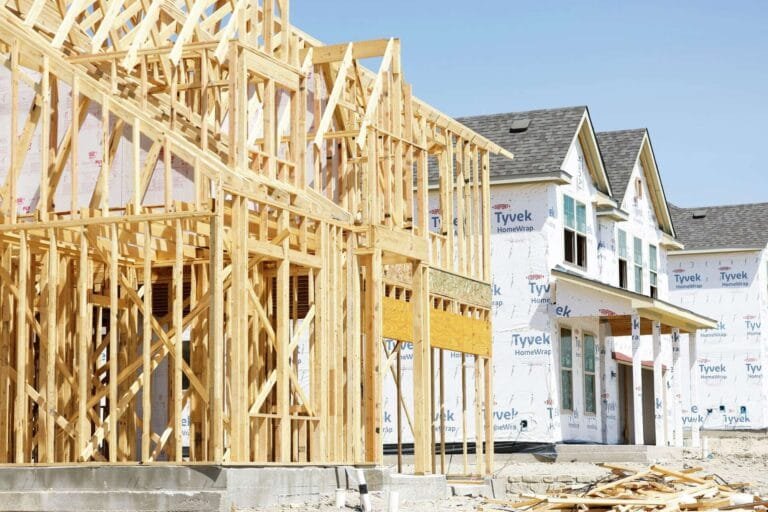
Washington – Construction of new single-family homes in the United States declined for the third consecutive month in June, while future building permits fell to their lowest level in ten months. This persistent slowdown is driven by elevated mortgage rates and a growing inventory of unsold new properties, creating a significant headwind for the recovery of the American housing sector despite recent legislative measures passed by Congress aimed at improving affordability and accelerating environmental approvals.
High Mortgage Rates and Cost Pressures Dampen Demand
Data released by the US Commerce Department’s Census Bureau revealed that single-family housing starts ticked down by 0.2% to an annualized rate of 895,000 units, with reductions heavily concentrated across the Northeast, South, and Midwest regions. Simultaneously, building permits dropped by 2.4% to 871,000 units, marking the weakest reading since August 2025. Economists attribute this contraction to the 30-year fixed mortgage rate hovering around 6.55%, an 11-month high stimulated by earlier geopolitical and military frictions between Washington and Tehran, which injected high volatility into global energy and commodity markets.
Mixed Economic Signals and Multi-Family Housing Surges
Conversely, the broader economic landscape presented highly mixed signals as total housing starts actually jumped by 19% to an annualized rate of 1.427 million units, propelled by a staggering 76.3% surge in multi-family housing projects. Furthermore, the manufacturing sector continued to showcase remarkable resilience, with factory output in the second quarter registering its fastest expansion in five years due to massive capital allocations toward artificial intelligence infrastructure. However, with import prices rising 0.3% in June to score a 7.1% year-on-year jump, persistent inflationary pressures may force the Federal Reserve to maintain an exceedingly cautious monetary posture in the coming months.