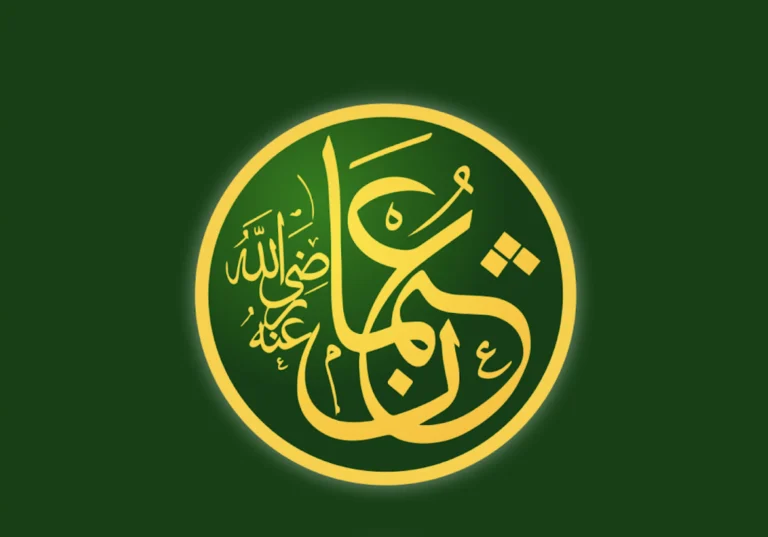
Medina, Saudi Arabia – The anniversary of the martyrdom of the third Rashidun Caliph, Uthman ibn Affan (may God be pleased with him),
one of the most prominent companions of the Prophet Muhammad (peace and blessings be upon him), is being commemorated.
His name is linked to a significant period in the history of the Islamic state.
His caliphate ended with the siege of his home and his martyrdom in an event that marked the beginning of
what is known in Islamic history as the “Great Fitna” (civil war).
Uthman ibn Affan assumed the caliphate in 644 CE after the death of Caliph Umar ibn al-Khattab.
His caliphate lasted approximately 12 years, during which the Islamic state witnessed significant expansion.
Conquests extended to vast areas in North Africa and Central Asia.
His reign also saw the establishment of the first Islamic navy
and the development of the state’s financial and military administration.
Uthman refused to shed Muslim blood
His greatest achievement is to bring Muslims together on one Qur’an,
after he ordered the copying of the Noble Qur’an and sending copies of it to different countries,
in order to preserve the unity of the Holy Qur’an and prevent differences in readings among Muslims.
In the last years of his caliphate, a state of tension escalated due to complaints from some governors
and accusations related to the administration and appointment of officials.
This was exploited by opposition groups that came from a number of countries,
to impose a siege on the Caliph’s home in Medina.
Despite the demands of a number of his companions to allow them to defend him,
Othman bin Affan refused to shed Muslim blood for him.
He preferred patience and not armed confrontation, out of concern for the unity of the nation
and avoiding the outbreak of an internal war.
Unifying the Holy Quran
On the 18th of Dhu al-Hijjah, 35 AH (656 CE), a number of rebels stormed his house,
and he was martyred while reciting the Holy Quran.
His assassination ushered in a period of political turmoil and internal conflict known historically
as the “Great Fitna,” which later witnessed pivotal events in the history of the Islamic state.
Uthman ibn Affan (may God be pleased with him) remains one of the most prominent of the Rightly Guided Caliphs,
due to his achievements in serving Islam and the state.
Foremost among these was the standardization of the Holy Quran,
a step that contributed to its preservation as Muslims recite it to this day.