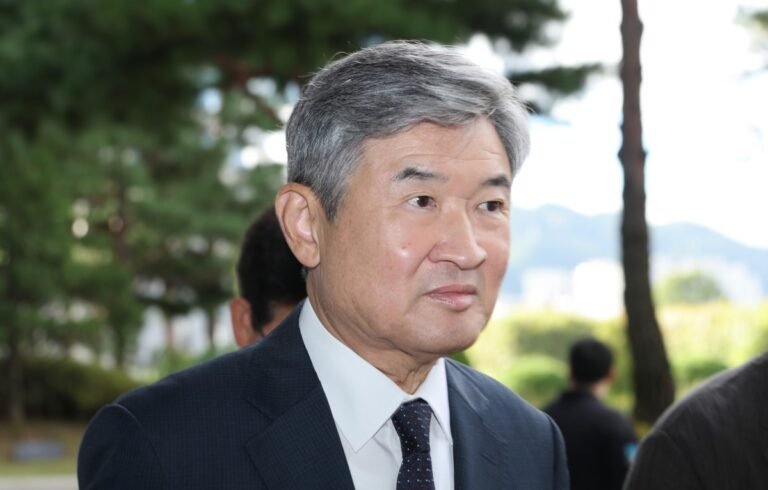
Seoul, South Korea – The 32nd Criminal Chamber of the Seoul Central District Court, presided over by Judge Ryu Kyung-jin, sentenced former South Korean National Intelligence Service chief Cho Tae-yong to one year and six months in prison on Thursday after formally convicting him of perjury and falsifying official documents. He was acquitted of most of the major charges related to the controversial imposition of martial law on December 3rd.
The sentence handed down to Cho, who was tried behind bars, was less than half the seven-year prison term sought by the special prosecution led by Jo Eun-seok, which handled the insurrection case. Although he was acquitted of the major charges, the court emphasized that the forgery and perjury he committed “were not minor offenses and warranted a custodial sentence.”
Acquittal from negligence and the siege of Parliament
The court concluded that the main charges against Cho of dereliction of duty and violating the ban on political participation were not proven. The defendant had been accused of negligence for failing to inform the National Assembly (parliament) about former President Yoon Seok-yeol’s actions to mobilize military forces and surround the parliament building to arbitrarily arrest politicians.
The court ruled that it could not be concluded that Cho had fully acknowledged the contents of the presidential order conveyed by his deputy, Hong Jang-won, noting that he might have treated the reports as rumors circulating during the state of emergency. Therefore, “it is difficult to consider him legally obligated to immediately report to parliament,” according to the South Korean news agency Yonhap.
Dropping charges of politicizing and destroying evidence
The court also dropped the charge of violating the ban on political participation, which stemmed from his leaking CCTV footage of his deputy, Hong, only to the ruling People Power Party. He refused to provide it to the opposition Democratic Party. He was also acquitted of the charge of destroying evidence by deleting records and confidential phone conversations related to the arrests of former President Yoon Seok-yeol.
Conviction for forgery and reprimand from the court
In contrast, the former director was convicted of perjury for giving false and misleading testimony before the Constitutional Court, in which he claimed he had not received martial law documents from the president. He was also found guilty of creating a forged official document in the name of the intelligence service to evade accountability.
The court issued a stern rebuke to the accused, stating that: “As the head of the highest intelligence agency, he should have demonstrated a responsible attitude by answering truthfully and honestly before Parliament and the public to resolve growing doubts and accept criticism with humility, but instead he chose to lie and falsify in a blatant attempt to evade responsibility,” considering that his behavior takes the crime beyond the realm of simple matters.