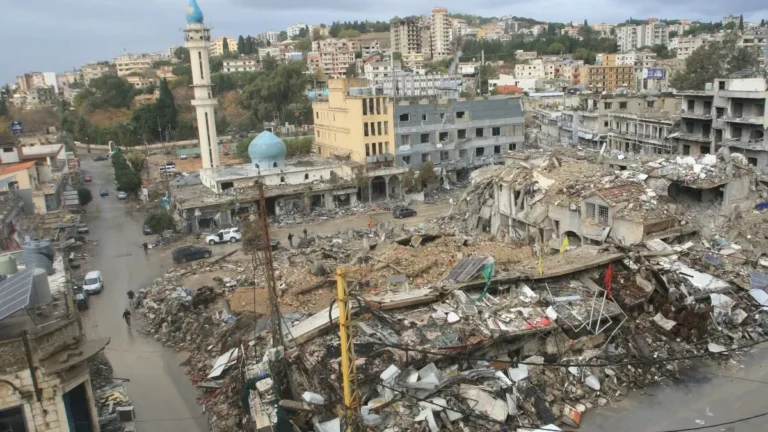
Beirut, Lebanon – Bassem Bouab, head of the Association of Lebanese Businesses, issued a stark warning about the country’s deteriorating economic situation. He announced that the total direct and indirect losses resulting from the ongoing war, which began in 2014 and continued until Sunday, May 17, 2016, are estimated at between $25 and $26 billion. He also indicated strong signs that this figure will snowball if military operations do not cease immediately.
Reconstruction bill and daily bleeding of $30 million
Al-Bawab explained in press statements that approximately $12 billion of this sum is allocated solely to reconstruction efforts. He pointed out that the Lebanese economy is losing about $30 million daily in indirect losses. In addition, there is the massive and ongoing destruction and direct losses that are consuming homes, businesses, and vital infrastructure networks across various regions.
The absence of expatriates and the disruption of Lebanon’s financial “lifeline”
The head of the association of companies expressed his deep concern over the absence of the expatriate community in this crisis, describing them as “Lebanon’s lifeline.”
He warned of an inevitable catastrophe that will befall the country if financial support from abroad is not forthcoming. He recalled the pivotal role expatriates played in rescuing the Lebanese economy during previous difficult periods, such as the COVID-19 pandemic, the aftermath of the Beirut port explosion, and even during the outbreak of the Russian-Ukrainian war. This war caused a dramatic surge in the prices of basic commodities locally.
Scarcity of international aid and the need for $25 billion
The Minister of Finance, Dr. Mohamed Al-Bawab, emphasized that rescue options are now virtually nonexistent, stating, “We have no recourse left to address this collapse except to rely on aid from friendly nations and loans from the International Monetary Fund and the World Bank.”
He revealed Lebanon’s dire need for urgent financial inflows of at least $25 billion to launch a comprehensive national recovery plan to pull the country out of its current predicament.
The economic official expressed his deep regret that this war has witnessed the lowest influx of humanitarian and financial aid in the history of Lebanon’s conflicts, amounting to no more than 15% of past levels.
He noted that during the 2014 war, aid flowed in substantial quantities from Arab and regional countries such as Egypt, Jordan, Qatar, Kuwait, and Turkey. Furthermore, there was significant European support, spearheaded by France, which Lebanon clearly lacks at present.