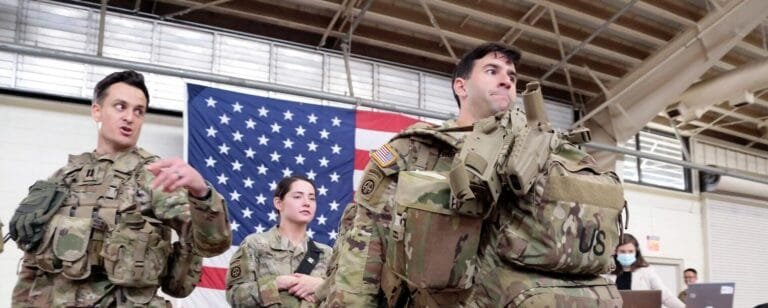
Washington, DC – The Pentagon’s recent decision to withdraw 5,000 troops from US military bases in Germany has sparked a wave of criticism and warnings within Congress and across European capitals, amid fears that the move could undermine the collective security architecture of the continent and destabilize NATO.
The Republican chairmen of the House Armed Services Committee expressed their “deep concern” over the abrupt decision. In a joint statement, Senator Roger Wicker and Representative Mike Rogers warned that reducing the growing U.S. military presence in Europe at this critical juncture is “premature.” The two Republican leaders also asserted that the troop withdrawal could weaken the overall deterrence strategy. Furthermore, they argued that the decision sends “the wrong message” to Russian President Vladimir Putin, suggesting a significant weakening of the U.S. commitment to allied security.
NATO requests official clarification
For its part, NATO has entered the fray. The alliance’s leadership announced that it has formally requested Washington to provide “urgent clarifications” and precise details regarding the plan and its timeline. This request aims to understand how to address the security gaps that this withdrawal might leave, particularly in light of ongoing Russian threats on the alliance’s eastern flank.
Fears of a rift in the alliance
In a related development, Polish Prime Minister Donald Tusk did not conceal his concerns about the strategic implications of the decision, warning that “the greatest threat to the transatlantic community today is the continued weakening of the alliance.”
These statements reflect European anxiety about a shift in US foreign policy. This shift could leave the continent alone to face growing security challenges.
Observers believe this decision comes at the height of significant diplomatic tension between Washington and Berlin, where relations are strained by sharp disagreements with German Chancellor Friedrich Merz.
Merz recently angered the US administration with controversial remarks, stating that Iran’s role in the current conflict represents a “humiliation” for the United States. In this tense climate between the two traditional allies, serious questions arise about the future of American leadership in Europe and the ability of the allies to maintain a united front in the face of escalating global crises.