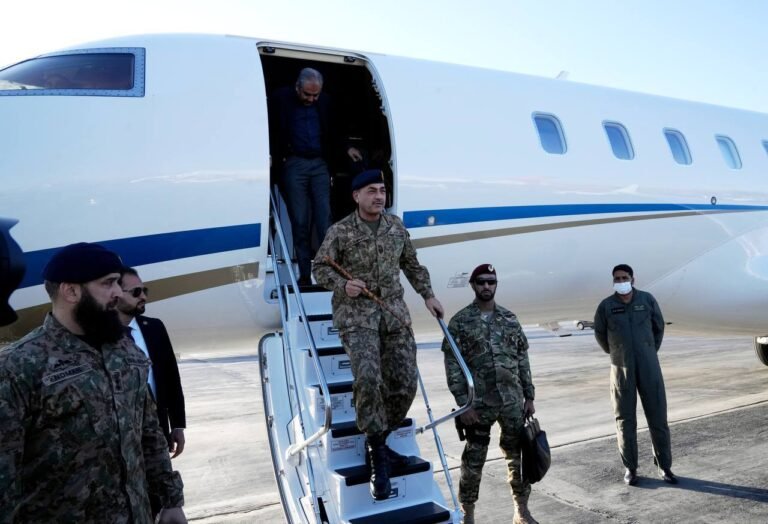
Tehran, Iran – Pakistan’s Chief of Army Staff, Air Marshal Asim Munir, departed the Iranian capital, Tehran, on Saturday, concluding a three-day high-level diplomatic visit. The visit was described as “pivotal” in efforts to defuse the escalating crisis between the Islamic Republic and the United States.
Munir’s departure followed an intensive round of talks after the failure of previous negotiations in Islamabad. Those talks, however, did not achieve any tangible diplomatic breakthrough.
Strategic meetings and Washington messages
The visit included several highly significant meetings, most notably the meeting held Thursday morning with Iranian Parliament Speaker Mohammad Bagher Ghalibaf. Ghalibaf is a key figure in leading the Iranian negotiating team. Informed sources indicated that Mounir carried indirect messages from the US administration aimed at bridging the gap between the two sides’ positions. In this context, Reuters quoted a high-ranking Iranian official as saying that Marshal Mounir’s talks in Tehran “effectively contributed to narrowing the differences with Washington on some outstanding issues.” However, he emphasized that “fundamental points of divergence” remain and require further discussion. This is particularly evident regarding security guarantees and the nuclear issue.
Munir… the trusted “engineer of compatibility”
Assem Munir’s actions carry exceptional international weight due to his status as an influential military and political leader with “open lines” to the White House. Media reports indicate that his personal and professional relationships with the US administration, and with President Donald Trump in particular, have made him the preferred mediator for both sides. Munir has successfully presented himself as someone capable of understanding Trump’s security concerns while simultaneously grasping Tehran’s red lines.
Prospects for a diplomatic solution
These moves come amid complex regional circumstances since the start of the exchange of hostilities on February 28.
With the departure of the Pakistani delegation, cautious optimism prevails in diplomatic circles regarding the possibility of resuming a second round of direct or indirect talks in Islamabad soon. This optimism is particularly pronounced following Iranian statements indicating that Tehran is open to any solution that preserves its “dignity and national interests.” This strengthens the hypothesis that Munir’s mediation has laid the groundwork for an imminent agreement to end the state of war.