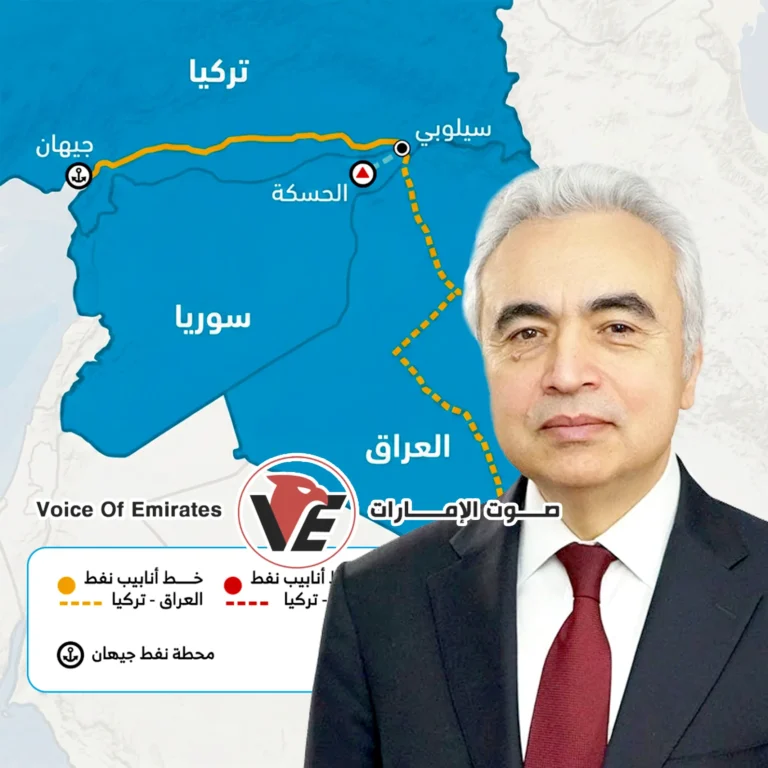
Vienna, Austria – Amid escalating geopolitical tensions threatening global energy flows, the Executive Director of the International Energy Agency (IEA), Fatih Birol, has proposed strengthening the oil pipeline linking Iraq to a Turkish oil terminal on the Mediterranean Sea.
This proposal aims to provide a sustainable overland alternative.
It would also reduce the overall dependence on energy transport through the Strait of Hormuz.
The Strait of Hormuz has faced a series of crises that threaten the security of international energy supplies.
Hermes’ broken vase
In statements carried by the Turkish newspaper “Hurriyet”, Birol described the current situation in the waterways in cautionary terms.
He said: The Strait of Hormuz vase is broken, and it is very difficult to repair it at the moment
Birol stressed that activating and expanding the Iraqi-Turkish line represents “an urgent necessity for Iraq,
a major economic opportunity for Turkey, and a strategic gain for Europe”
Europe is seeking safe alternatives to secure its energy needs away from maritime conflict zones
From FAO to Ceyhan: The New Energy Corridor
This call comes in the context of supporting a previous project proposed
by Ankara to extend the oil pipeline connecting the northern Kirkuk fields to the Turkish port of Ceyhan.
The pipeline would then reach the far south of Iraq.
The project aims to create a line extending from the strategic port of FAO in Basra to northern Turkey
This is to connect the oil fields in the Arabian Gulf directly to the Mediterranean Sea,
without the need to pass through the Strait of Hormuz or the Suez Canal.
Regional moves to link the Gulf with Europe
In a related context, recent times have witnessed intensive diplomatic activity.
Türkiye, Syria and Jordan have separately agreed on plans to modernize their railway and highway systems.
These understandings aim to create an integrated land corridor linking the Arab Gulf states with southern Europe.
This would enhance the resilience of global supply chains.
Observers believe this shift towards “land routes” reflects a fundamental change in global energy security strategies.
Regional and international powers are seeking to secure alternative routes.
These routes bypass maritime bottlenecks, which have become vulnerable to political rivalries and military threats.