- A political apology… and the fires continue.
- Dual decision-making between the presidency and the military establishment
- The Iranian message is not a complete ceasefire.
- Tehran is trying to calm the Gulf without giving up on pressure.
- Conditional deterrence, not complete appeasement
- Why do Gulf capitals look at actions, not words?
- The logic of Gulf caution
- The UAE and the Gulf are facing a phase of open-ended security vigilance.
- Expectations for the next phase: a calculated escalation or a conditional de-escalation?
- The apology stands, but deterrence still dominates the scene.
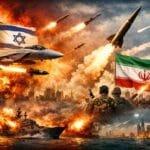
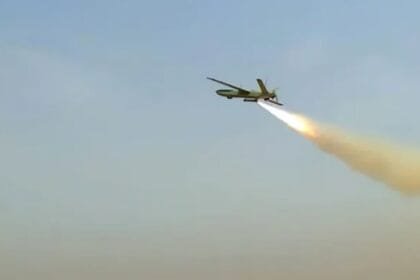
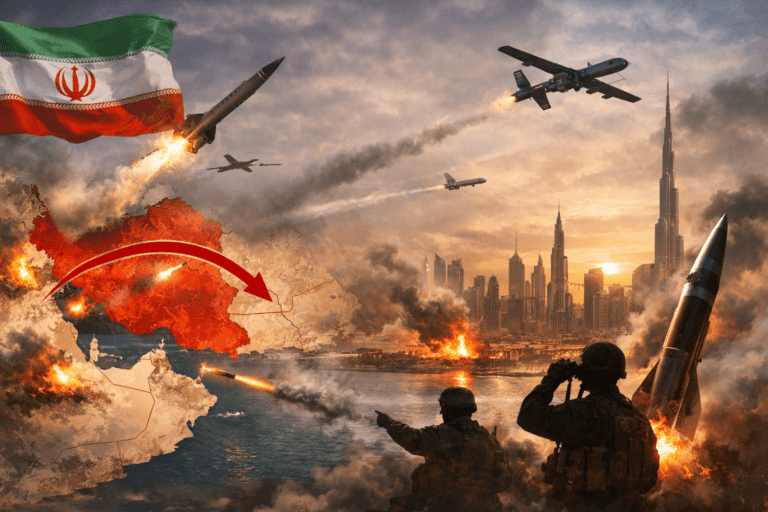
Dubai, UAE – Iranian President Masoud Pezeshkian’s public apology to the Gulf states did little to quell the escalation, as missiles and drones continued to strike targets across the region almost simultaneously. The Associated Press reported that Pezeshkian’s apology came as drones and missiles were launched toward Gulf countries. The attacks disrupted flights at Dubai International Airport and targeted a major Saudi oil facility. The wave of attacks also forced residents in Bahrain to seek shelter. The Guardian reported that Pezeshkian offered a rare apology to the Gulf neighbors and announced a suspension of attacks on neighboring countries unless an attack on Iran was launched from their territory. However, the attacks on the Gulf continued, leading officials and observers to approach any talk of a swift de-escalation with caution.
A political apology… and the fires continue.
This contradiction, in essence, offers the key to understanding current Iranian behavior. There is a political discourse aimed at appeasing neighboring countries, juxtaposed with a military strategy still operating on the logic of regional pressure. The message issued by the Iranian presidency appeared more like an attempt to contain Gulf anger and prevent the confrontation from escalating. However, the continuation of attacks at the same time demonstrated that the situation on the ground has not yet fully embraced the new political language. Therefore, the apology was not interpreted by the Gulf states as a decisive shift. Rather, it was seen as an incomplete gesture, insufficient on its own to dispel concerns.
Dual decision-making between the presidency and the military establishment
The Associated Press reported that Pezeshkian’s message appeared to reveal the limitations of his actual authority over the Revolutionary Guard. It also noted that this institution manages a significant portion of the missile arsenal and seems to operate with greater autonomy in target selection. Similarly, The Guardian reported that the Iranian president’s offer to halt attacks on neighboring countries provoked an angry domestic reaction. The military establishment also appeared to contradict or even disregard him. According to observers, this situation reflects confusion within Tehran’s decision-making circles. Or at the very least, it reveals that political decisions alone do not hold the key to controlling military decisions in times of war.
The Iranian message is not a complete ceasefire.
While the apology may have appeared on the surface to be a conciliatory gesture, the Financial Times report complicates its interpretation. It stated that just hours after Pezeshkian’s speech, Tehran warned that it would continue striking American and Israeli military targets in the region if the war persisted. This came despite his assertion that Iran would not target Gulf states unless their territory or airspace were used against it. According to the newspaper, attacks continued against the UAE, Saudi Arabia, and Qatar. This suggests that the Iranian message was not a complete ceasefire, but rather an attempt to isolate the Gulf from the conflict and prevent it from becoming a direct participant.
Tehran is trying to calm the Gulf without giving up on pressure.
According to observers and analysts at Western research centers, what is happening reflects not only chaotic decision-making but also a deliberate Iranian strategy to raise the cost of war with the Gulf states without necessarily seeking a full-scale war. The idea of de-escalation here does not mean withdrawing pressure, but rather redefining it. Tehran, according to this assessment, wants to tell the Gulf states that it is not seeking open hostility. But at the same time, it wants to keep these states under threat as long as it views the American military presence in the region as part of the problem, not just a minor detail.
Conditional deterrence, not complete appeasement
Analysts believe that Iran is attempting to impose a new equation: de-escalation is possible, but with conditions. The most prominent of these conditions is that the territory, airspace, or bases of the Gulf states not be used as launching pads or support points for any military action against Tehran. Therefore, many observers view the apology not as a declaration of the end of the escalation, but rather as an offer of conditional de-escalation that Iran is trying to solidify through a combination of military action and political messaging. This explains the continuation of threats even after the conciliatory speech.
Why do Gulf capitals look at actions, not words?
Conversely, the Gulf states, particularly the UAE, do not appear to consider the Iranian apology a sufficient guarantee. A country that maintains its air defenses on high alert and deals with waves of missiles and drones cannot base its position on rhetoric alone. Therefore, the Gulf states’ assessment will remain tied to actions on the ground. Have the attacks truly ceased? Have they slowed down? And are there concrete signs of restraint in Iranian military decision-making? Unless these conditions are met, the apology will remain, in the eyes of the Gulf capitals, a political gesture with limited impact.
The logic of Gulf caution
In its previous coverage, Voice of Emirates had noted Abu Dhabi’s condemnation of the Iranian attacks, deeming them a direct threat to regional security. It also highlighted the Gulf Cooperation Council’s stance rejecting escalation and emphasizing the unity of its member states’ security. This background clarifies that the Gulf sentiment no longer views the events as a mere incident. Rather, it considers them a pattern of threat requiring vigilance and heightened defensive measures. Therefore, any conciliatory rhetoric from Tehran will remain subject to the test of its implementation, not its stated intentions.
The UAE and the Gulf are facing a phase of open-ended security vigilance.
The current situation indicates that the Gulf has indeed entered a new phase of heightened security vigilance. The attacks are no longer interpreted merely as an extension of Iran’s conflict with its adversaries, but rather as direct pressure on the region’s states themselves, targeting their airports, vital infrastructure, airlines, and oil facilities. According to analysts, this shift is prompting Gulf states to reassess the regional security equation. It also reinforces the trend toward increased preparedness, expanded defense capabilities, and a more cautious approach to any potential Iranian de-escalation.
Expectations for the next phase: a calculated escalation or a conditional de-escalation?
As for the near-term outlook, three likely scenarios emerge. The first is the continuation of intermittent Iranian pressure on the Gulf, but at a calculated pace that maintains deterrence without immediately pushing the region into a full-blown war. The second is that airports, energy facilities, sea lanes, and defense systems remain within the range of potential threats. These are both effective and sensitive arenas for exerting pressure. The third scenario is that the door remains open for a conditional de-escalation, provided there are mutual guarantees that the territory or bases of neighboring countries will not be used for offensive operations. Furthermore, Tehran may succeed in unifying its political and military message.
The apology stands, but deterrence still dominates the scene.
Ultimately, the problem doesn’t lie in the apology itself, but rather in its timing, coinciding with the continuation of the attacks. The current crisis is rooted in the political rhetoric emanating from Tehran and the military actions on the ground. Iran seeks to appease the Gulf states verbally, but continues to exert pressure militarily. According to the most likely conclusion among observers, the Gulf states will not be satisfied with a simple apology. They will expect something more significant: a clear and sustained cessation of attacks. Until that occurs, armed deterrence, not diplomatic language, will remain the most influential factor in the current situation.