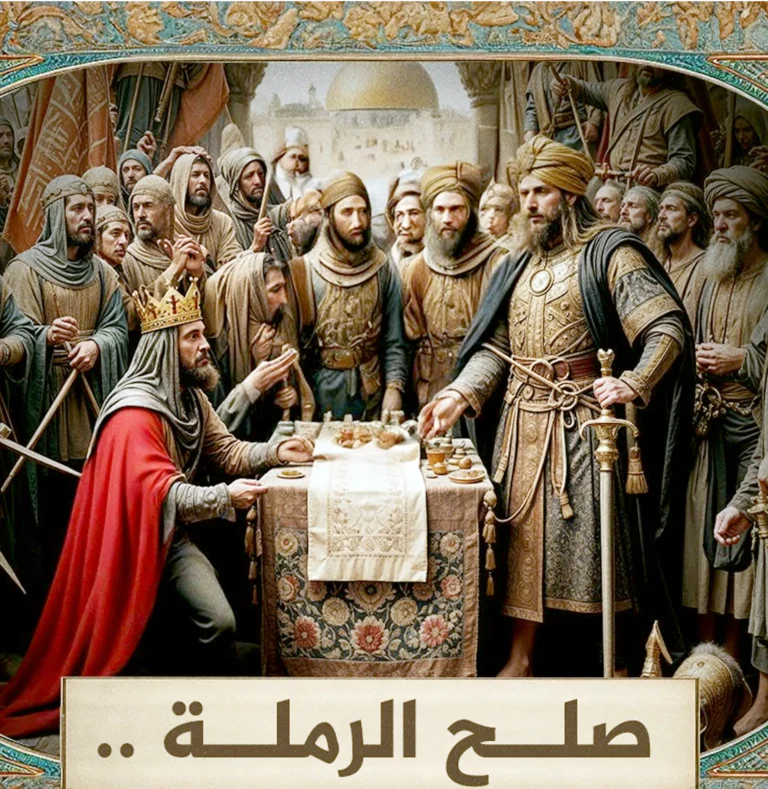
Ramla, Palestine – On this day in 1192, the Third Crusade entered a new phase.
This followed an agreement between King Richard I of England, known as Richard the Lionheart,
and Saladin, which ended much of the fighting between the two sides after years of intense clashes.
The agreement came after a series of battles that erupted following Saladin’s recapture of Jerusalem in 1187,
which prompted several European powers to launch the Third Crusade.
Richard the Lionheart, King Philip II of France, and Emperor Frederick Barbarossa all participated in this campaign.
Important military and political victories
During the campaign, Richard managed to recapture Acre.
He also achieved significant military victories, most notably the Battle of Arsuf.
However, he was unable to achieve his primary objective of recapturing Jerusalem.
Meanwhile, Saladin realized that continuing the war was taking a heavy toll on his forces and his kingdom,
especially after years of continuous fighting. Richard, for his part, faced political and military pressure in Europe.
Therefore, reaching a settlement became a more realistic option for both sides.
In September 1192, the Treaty of Ramla was concluded. The treaty stipulated
that Jerusalem would remain under Muslim control, while allowing Christian pilgrims to visit the holy city.
The Crusaders also received a coastal strip extending from Tyre to Jaffa.
Furthermore, the arrangements included agreements concerning other disputed cities and territories.
The story of Richard and Saladin
Although Richard did not achieve his goal of recapturing Jerusalem,
the agreement allowed him to end his campaign and return to Europe.
Saladin, meanwhile, retained control of Jerusalem and most of the interior.
The agreement did not mark the end of the conflict between Muslims and Crusaders in the region.
However, it did bring to a halt one of the most famous confrontations
between two prominent powers in medieval history.
Thus, the story of Richard the Lionheart and Saladin transformed
from a mere military clash into one of the most celebrated examples of negotiation
between adversaries who met on the battlefield and then ended the war with a political agreement.