Moscow, Russia – On August 29, 1949, the Soviet Union officially entered the nuclear age after successfully detonating its first atomic bomb at the Semipalatinsk Nuclear Test Site in Kazakhstan.
This act dramatically altered the global balance of power and ignited an arms race between Moscow and Washington.
The Soviet Union’s first atomic bomb was designated RDS-1. Its test followed years of secret research
and intensive work to develop an independent nuclear capability.
Moscow primary objective was to break the United States dominance in the field of nuclear weapons,
particularly after the US use of atomic bombs against Hiroshima and Nagasaki in 1945.
Unprecedented destructive power
Soviet interest in the nuclear project began during World War II, when the Soviet leadership realized
that research related to the atom could be developed into a weapon with unprecedented destructive power.
As the American nuclear program advanced, Moscow moved more quickly to establish its own project.
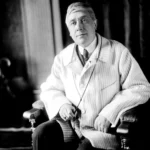
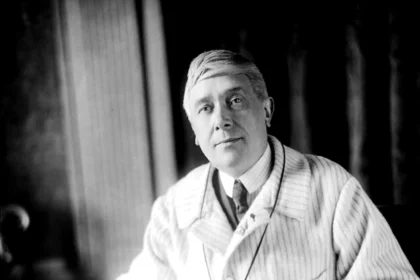
The physicist Igor Kurchatov played a leading role in the Soviet scientific efforts.
He worked alongside a group of scientists and engineers under strict security measures.
The development of the bomb became a massive national project involving
numerous scientific, industrial, and military institutions.
Changing the rules of the international game
Moscow did not rely solely on domestic research. Soviet intelligence obtained
classified information from within the American nuclear program.
This helped Soviet scientists understand some details of the American project and accelerate their efforts to develop the bomb.
When the first explosion occurred in August 1949, it came as a major surprise to the United States.
The test revealed that the Soviet Union had succeeded in acquiring
a nuclear weapon ahead of some Western estimates.
The test changed the rules of the international game; the United States was
no longer the only power possessing the atomic bomb.
The Soviet Union was now able to develop a nuclear deterrent strategy against its main adversary.
Mutual deterrence strategy
But the competition didn’t stop at the atomic bomb. It quickly escalated to
a more dangerous phase with the development of hydrogen bombs,
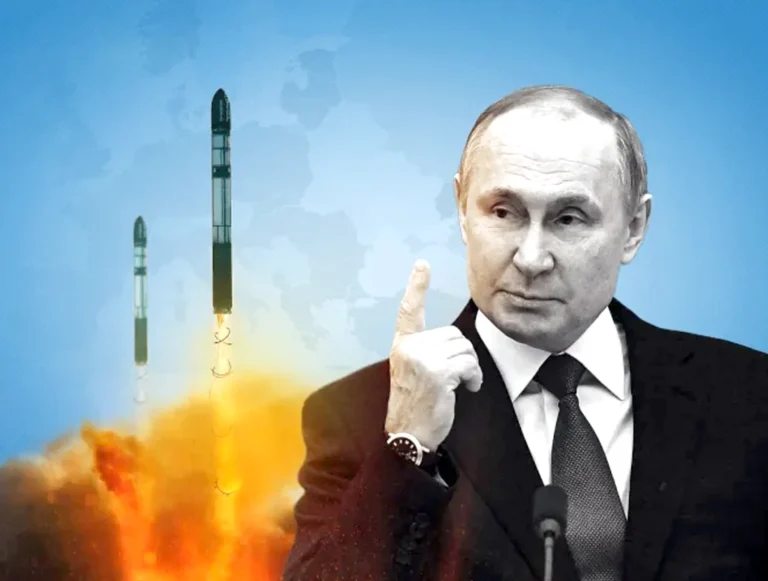
intercontinental ballistic missiles, nuclear submarines, and long-range nuclear warhead delivery systems.
As the nuclear arsenals of both sides expanded, the threat of a full-scale nuclear war
became one of the world’s greatest concerns during the Cold War.
The strategy of mutual deterrence also emerged, based on the idea that any nuclear attack would be met
with a devastating response from the other side.
Thus, the detonation of the RDS-1 was not merely a scientific achievement for the Soviet Union;
it was a turning point that redrawn the map of international power.
It also unleashed a nuclear arms race that lasted for decades,
making nuclear weapons one of the most significant factors shaping relations
between the major powers throughout the second half of the 20th century.