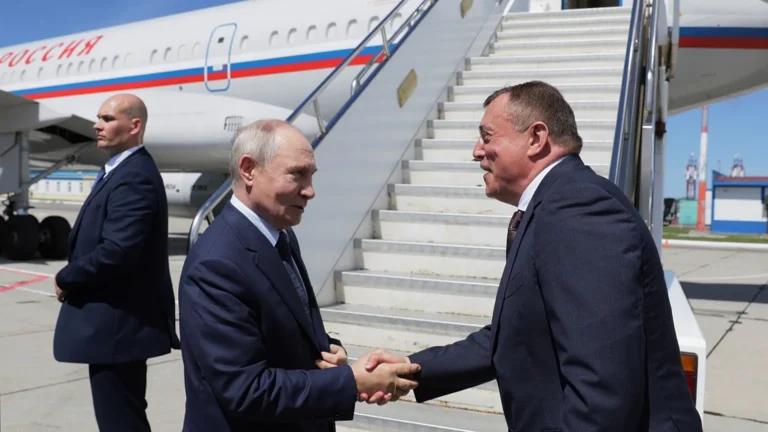
Tokyo – The Japanese government summoned Russian Ambassador Nikolai Nozdrev to deliver a formal protest following President Vladimir Putin’s visit to Iturup Island, one of the disputed Southern Kurils. Consequently, this diplomatic rebuke underscores Tokyo’s firm refusal to acknowledge Russian sovereignty over what Japan designates as the Northern Territories.
Furthermore, Japanese officials condemned Putin’s inspection of seafood processing facilities during his Far East tour as a provocative move that compromises the legal status of the territory. As a result, Tokyo reiterated that unilateral Russian actions cannot alter Japan’s historical and legal claims over the islands occupied since the end of World War II.
Strategic Importance and Historical Impasse
On the other hand, the territorial dispute dates back to the Soviet takeover at the close of World War II, which has continuously blocked the signing of a formal peace treaty between the two nations. Additionally, the Southern Kurils hold immense geopolitical value, offering strategic oversight across vital shipping routes in the North Pacific along with rich natural resources.
Consequently, this enduring dispute is further exacerbated by current geopolitical friction stemming from the war in Ukraine and sweeping Japanese sanctions against Moscow. Ultimately, Tokyo aims to safeguard its sovereign claims and counter attempts to normalize Russian jurisdiction over the islands.
Finally, Japan’s protest reflects deepening diplomatic strain between Tokyo and Moscow. Ultimately, resolving the territorial impasse will require renewed diplomatic dialogue capable of addressing broader security dynamics across Northeast Asia.