Seoul – In a firm diplomatic and commercial move, the South Korean government submitted an official written response to the Office of the United States Trade Representative (USTR). It demanded a reconsideration of US threats to impose additional tariffs on Korean products over allegations of importing goods produced through “forced labor.” Seoul asserted that these claims lack any factual or sound analytical basis.
Absence of Factual and Analytical Evidence
The Korean government explained in its memo that the USTR’s conclusion that South Korea imports products manufactured through forced labor and harms US trade is not based on accurate data. In support, the government cited a report by the International Energy Agency (IEA), which made absolutely no mention of any concerns regarding Korea’s involvement in importing “polysilicon” produced through unethical practices. On the contrary, the report’s appendix explicitly confirmed that Korea is not among the countries that import these materials. The report also noted that Korea does not re-export them to the United States.
Strict Legal and International Commitment
The Korean statement emphasized that Seoul adheres to “multifaceted policies” to ensure domestic supply chains are free of any products resulting from forced labor. This is achieved through a solid national legal framework and a steadfast commitment to international agreements. The government confirmed that Korea is fulfilling all its pledges outlined in the “Joint Fact Sheet” of the Korea-US summit. These pledges are aimed at full cooperation to eradicate these practices globally.
Requesting Preferential Treatment and Supporting the Trade Sector
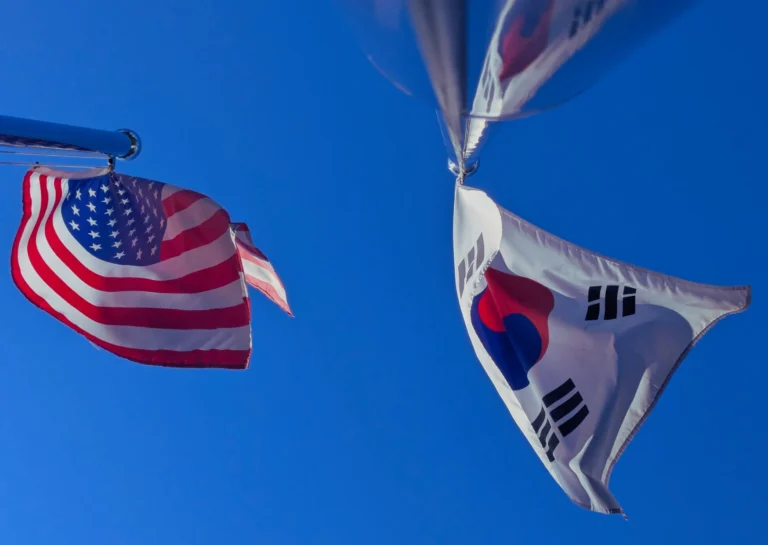
The Korean government described the proposed US measures as “excessive and unnecessary,” calling for a comprehensive reconsideration. However, Korea indicated that if the United States insists on imposing tariffs, Korean products must receive much better “preferential treatment” than what has been proposed. This approach would reflect the close strategic partnership between the two countries.
For its part, the Korea International Trade Association (KITA) supported the government’s position, demanding that the USTR suspend the implementation of the proposed additional tariffs (which reach 12.5%), or reduce them to a maximum of 10%.
It is worth noting that the US administration bases these measures on “Section 301” of the US Trade Act, following the invalidation of previously mutual tariffs by a Supreme Court ruling, putting trade between Seoul and Washington before a new test that requires a diplomatic solution that achieves mutual benefit and avoids an unwanted trade escalation.