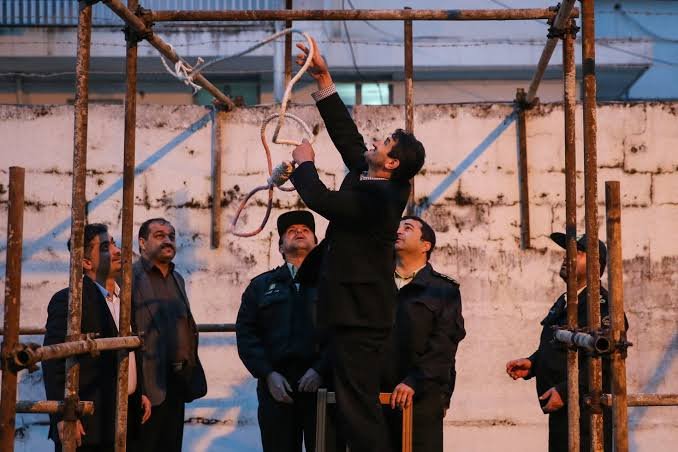
Tehran, Iran – The Hengaw Human Rights Organization has revealed a sharp and alarming increase in the rate of executions in Iranian prisons during June 2026. According to a report issued by the organization’s Statistics and Documentation Center, at least 109 prisoners were executed across Iran. This represents a 10% increase compared to June of last year, which saw 99 executions.
Lack of transparency and secretive implementation
The data reveals a significant gap between reality and official reports; Iranian judicial authorities and their affiliated websites have only announced seven cases, representing a mere 6.5% of the total number of executions. Human rights concerns are further heightened by the revelation that 12 executions were carried out “secretly.” These executions were conducted without prior notification to the victims’ families and without allowing them a final visit. This constitutes a flagrant violation of international legal and humanitarian standards.
Politically motivated executions
Of the total, authorities executed five political prisoners on charges including “enmity against God” and “espionage.” All five had been arrested in connection with the January protests. Among the victims were two Kurdish prisoners, Ashkan Maleki and Mehrdad Mohammadinia, who were executed in Ghezel Hesar Prison in Karaj on June 1. The list of political executions also included Fathollah Afari, Javad Zamani, and Abolfazl Saadi. Their sentences were carried out on June 6 in Hamadan and Shahroud Central Prisons.
Distribution of charges and executions of women
The reasons for the executions were varied, with premeditated murder topping the list at 54 cases (49.5%). Drug trafficking followed with 44 cases, while the remaining cases were distributed among rape, armed robbery, and political charges. Women were not spared from this wave; three women were executed. Among them was Afsaneh Zandabadi (from Tabriz), who was executed on drug-related charges. Asieh Farhamand and Zeinab Zareni were executed in Qazvin Prison for premeditated murder.
Targeting national minorities
The geographical and ethnic analysis of the executions revealed clear disparities, with Isfahan province recording the highest number at 15. This was followed by Sistan and Baluchestan (10) and Fars province (9). Ethnically, minorities were disproportionately represented. Eighteen Kurdish prisoners and eighteen Baloch prisoners were executed, along with twelve Lurs, ten Turks, and five Afghan nationals. Thirty-one Persian prisoners were among those executed.
This escalation comes at a time when Iran is facing increasing international criticism over its human rights record, particularly the rising pace of executions, which raises questions about the fairness of trials and the lack of due process. This is occurring amidst calls from human rights groups to halt these practices, which target various segments of Iranian society, especially political activists and members of minority groups.