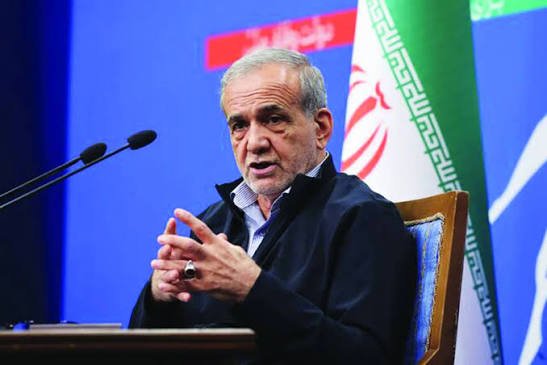
Tehran, Iran – Iranian President Masoud Pezeshkian announced on Monday the commencement of procedures to release a portion of Iran’s frozen assets abroad. This move represents a significant development in the ongoing understandings between Tehran and Washington. Pezeshkian explained that, according to the established plans, $6 billion of the $12 billion in Iranian assets held in Qatar will be released. These funds will then be returned to the country’s treasury.
Meeting of Shiite religious authorities
This announcement came during an official visit by President Pezeshkian to the city of Qom. There, he met with prominent Shiite cleric Shabir Zanjani. During the meeting, the Iranian president briefed Zanjani on the current status of Iranian funds frozen by the United States in Qatari banks. He also affirmed that the administration’s efforts are ongoing to transfer the remaining $6 billion in subsequent phases.
Memorandum of Understanding with Washington
These developments are based on previous understandings. Earlier this month, the head of the Iranian negotiating team, Mohammad Bagher Ghalibaf, announced that Article 11 of the memorandum of understanding reached between Tehran and Washington to end the war clearly stipulates the release of those assets in two installments, each worth $6 billion.
On the diplomatic front, this news comes days after the conclusion of the first round of negotiations between the United States and Iran in Switzerland. Western media reports, citing sources close to the negotiating teams, indicated that this round was a crucial step toward translating the understandings reached on the ground into concrete financial and economic measures.
Despite the official announcement, President Pezeshkian did not provide further details regarding the precise timeline for transferring these resources or the technical mechanism Tehran will employ to access the funds. This comes amidst international sanctions imposed on its banking sector.
Observers are watching to see if this move will contribute to easing the economic pressure on Iran. On the other hand, some anticipate that the transfer will remain subject to strict oversight to ensure its use for “humanitarian purposes,” as has been the case in previous agreements between the two sides.
This step, if implemented, reflects a mutual desire to solidify the “ceasefire agreement,” which has witnessed sharp tensions on the ground in recent days. This suggests a parallel track of financial diplomacy aimed at containing the military escalation through reciprocal economic concessions.