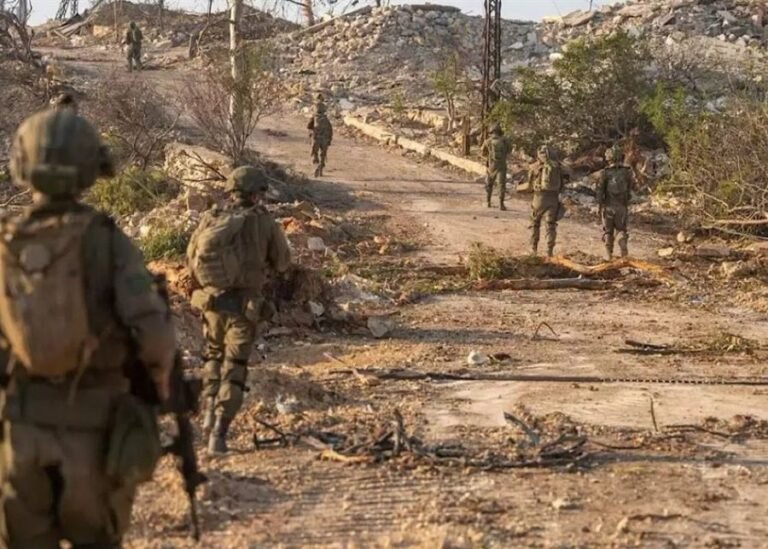
Beirut, Lebanon – In a move marking the first test of the framework agreement, Israeli forces have begun implementing an experimental withdrawal from two specific zones in Southern Lebanon. This development, revealed by informed sources, represents the initial phase of the agreed-upon security arrangements, aimed at measuring the success of field mechanisms in establishing stability before evaluating the results and proceeding to broader implementation stages.
The Strategy of Experimental Zones
The operational vision for this withdrawal relies on selecting two geographically and strategically significant zones; the first is located outside the Blue Line and south of the Litani River, while the second is situated outside the original Blue Line but north of the river itself. This carefully studied geographic distribution is intended to test the accuracy of the arrangements across varying terrain, monitor the level of compliance with security commitments on the ground, and ensure the prevention of any vacuum that could be exploited to incite new tensions.
Replacing Forces and Establishing Stability
The experimental withdrawal proceeds in tandem with a plan to reorganize the security situation in Southern Lebanon through direct coordination to deploy the Lebanese Army and relevant entities into the evacuated zones. This step is highly sensitive, aiming to demonstrate the Lebanese state’s ability to exercise its sovereignty and ensure these areas are free of any security threats. The process is subject to precise field monitoring and ongoing coordination to ensure the adherence to the agreement and the smooth transfer of security duties.
“Freedom of Movement” as a Security Equation
Despite proceeding with the experimental withdrawal, the framework agreement includes a core clause granting the Israeli military the freedom to conduct operations within what is designated as the “security strip” should it assess the existence of imminent threats or security breaches. This clause is viewed as a safeguard allowing the Israeli side to continue monitoring its national security on the ground, lending a unique nature to the agreement as it balances controlled field withdrawal with the capability to initiate military action when absolutely necessary.
Political and military circles in Lebanon and the region are closely monitoring the progress of these initial steps, hoping that this experiment succeeds in de-escalating long-standing border tensions and establishing a foundation of mutual trust that allows for the completion of the remaining phases of the understanding, ultimately preserving border security and sparing the region from further escalation.