Kuwait – The Kuwaiti Directorate General of Civil Aviation announced today, Thursday, June 11, 2026, the full resumption of normal air traffic in Kuwaiti airspace. This follows the resolution of the security and technical issues that necessitated temporary precautionary measures implemented in recent hours. These measures were taken to ensure the safety of air navigation.
The authority confirmed in its statement that it is closely monitoring regional developments around the clock, in continuous coordination with all relevant authorities both within and outside the country. This monitoring aims to maintain the highest levels of safety and security in Kuwaiti airspace.
The authority also reported that operations at Kuwait International Airport have returned to normal. Flights have resumed according to schedule. However, aviation authorities remain on high alert to assess any emerging security developments and take appropriate action as needed.
A tense regional context: Continued tit-for-tat attacks between Washington and Tehran
This Kuwaiti move comes amid a rapidly escalating military situation in the region. The US military announced early this morning the completion of a new wave of strikes targeting Iranian military surveillance capabilities, communications systems, and air defense sites.
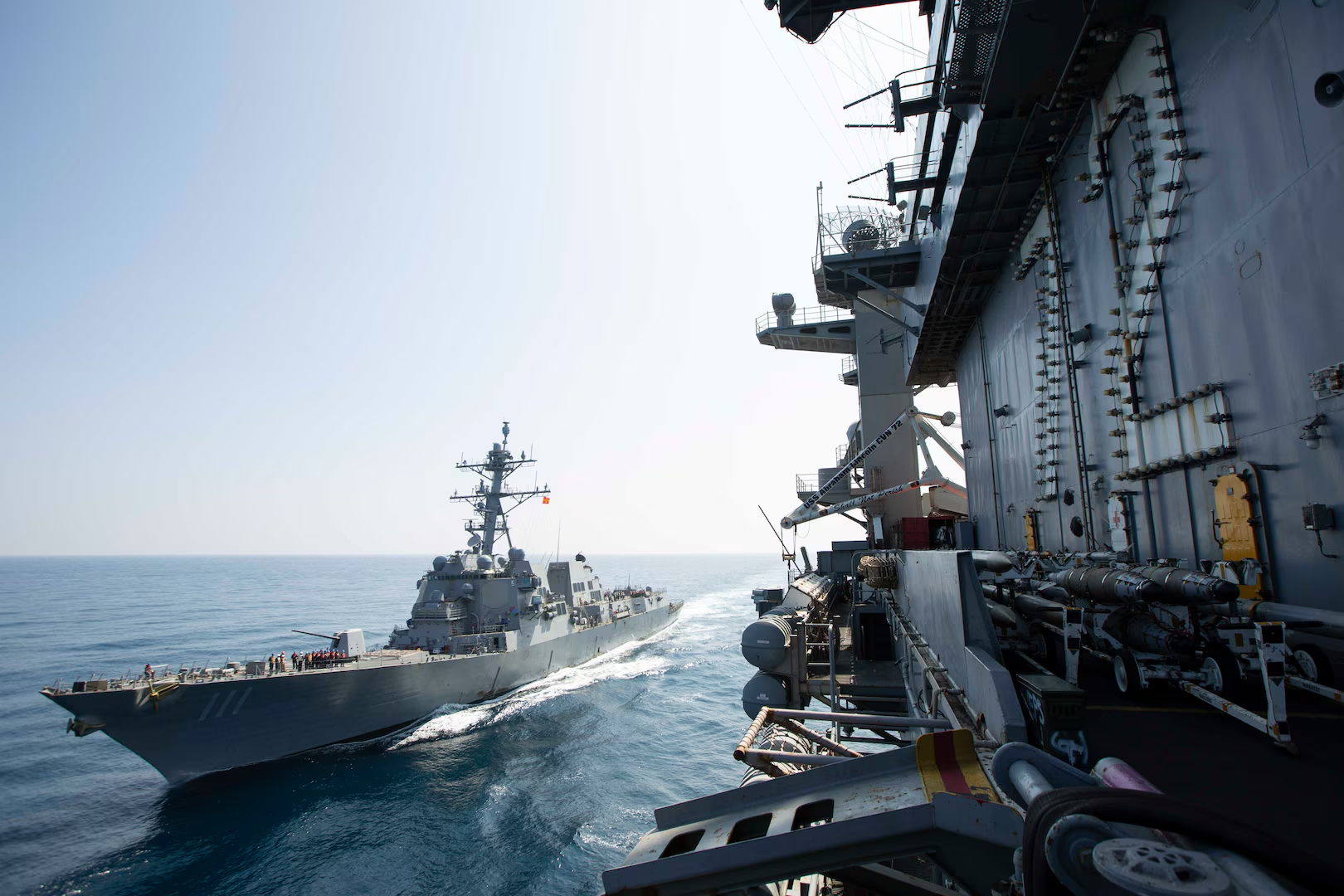
US Central Command (CENTCOM) stated that Marine, Air Force, and Navy units used precision-guided munitions to neutralize targets that Washington deemed a direct threat to its forces and to international shipping.
The Gulf is witnessing a second consecutive day of intense airstrikes. Meanwhile, US President Donald Trump has threatened further military action, asserting that he will do so unless Tehran immediately agrees to enter negotiations for a “peace agreement.”
The April truce collapses, raising fears of an escalation in the conflict.
Fighting escalated dangerously this week following the downing of a US Apache helicopter near the Strait of Hormuz, triggering a series of tit-for-tat attacks.
This escalation poses the most serious threat yet to the fragile ceasefire agreement reached last April, dashing hopes of ending the war that erupted in late February. The conflict has been marked by intense airstrikes from the United States and Israel. This latest round of fighting has raised international concerns that it could widen the conflict and further destabilize the region.