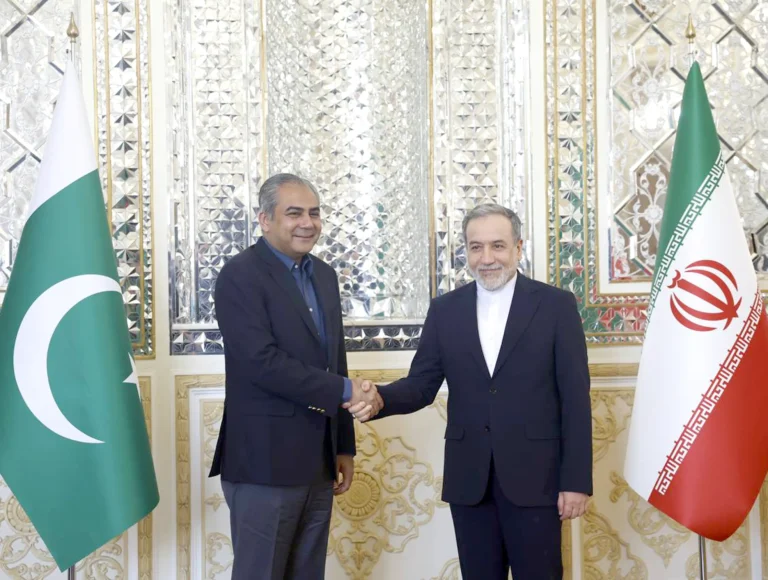
Tehran, Iran – In an intensive diplomatic effort to break the deadlock in regional crises, Pakistani Interior Minister Mohsin Naqvi held a series of high-level talks in Tehran.
This comes as part of Islamabad’s efforts to bridge the gap and reach understandings
that would end the current tensions between Tehran and Washington.
An exceptional message to Mojtaba Khamenei
The Pakistani minister arrived in Tehran, where he met with Iranian Foreign Minister Abbas Araqchi.
This followed in-depth consultations with his Iranian counterpart, Eskandar Momeni.
In statements to the press after the meetings, Naqvi emphasized the exceptional nature of his visit.
He explained that he was tasked with delivering a special and urgent message
from Pakistani Prime Minister Shehbaz Sharif and Army Chief Asim Munir to Iranian Supreme Leader Mojtaba Khamenei.
Naqvi described the message as “extremely important,” noting that it reflected
Islamabad’s keenness to find a way out of the successive crises plaguing the region.
Furthermore, the minister stressed the depth of the fraternal relations and historical ties that bind the two countries.
He affirmed the principle of shared destiny, stating, “If one brother faces a problem, the other feels it too.”
Optimism for a “happy ending”
The Pakistani minister expressed his deep appreciation for the level of coordination and the warm welcome he received from Iranian officials during his visit.
He also expressed cautious optimism about the possibility of reaching a “happy ending” to these diplomatic efforts.
This Pakistani move comes at a sensitive time, as regional and international circles await
any breakthrough in the indirect negotiations between Tehran and Washington.
These actions indicate the significant role Pakistan is playing as a regional mediator.
The Pakistani side is seeking to leverage its distinguished relations with both parties
to create common ground. Ultimately, these efforts may lead to de-escalation.
The “special” message carried by Naqvi is expected to be discussed at the highest levels of decision-making in Tehran.
Many hope that this message will contribute to ending the current political deadlock
and could open new avenues for sustainable diplomatic solutions.