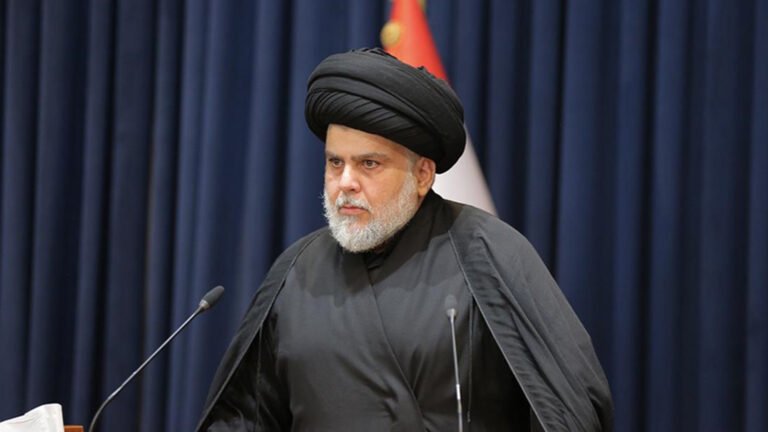
Baghdad, Iraq – In a decisive procedural step aimed at strengthening the authority of official institutions, Muqtada al-Sadr, leader of the Shia National Movement, issued official directives on Thursday to commanders in the Peace Brigades, ordering them to end all procedures for severing ties with the movement. Furthermore, he ordered their complete integration into Iraqi state institutions within one week.
Executive Committee for Managing the Disengagement File
According to an official document issued by al-Sadr’s private office, a high-level committee was tasked with overseeing this process. The committee includes his private office director, Haider al-Jabri; military advisor Abu Duaa al-Issawi; jihadist aide Tahsin al-Humaidawi; and Muhammad al-Aboudi, head of the “al-Bunyan al-Marsous” (Solid Structure) forces. The directives also emphasized the necessity of completing the full handover by Eid al-Ghadir. Furthermore, they indicated the integration of the civilian wing of the Saraya al-Sham (Brigades) into the “al-Bunyan al-Marsous” framework, in full coordination with the relevant government authorities.
A roadmap for ending the partisan activities of the factions
These directives complement al-Sadr’s earlier initiative in which he announced the separation of the Peace Brigades from the Sadrist Movement and their integration into the state. Furthermore, al-Sadr called on other factions to distance themselves from partisan and sectarian frameworks and to operate under the authority of the official state. This step represents a practical implementation of his call to confine military action and weapons to government institutions.
Government welcome and calls to generalize the experiment
For his part, Prime Minister and Commander-in-Chief of the Armed Forces, Ali Faleh al-Zaidi, praised this step, considering it “an important path to strengthening internal stability and consolidating the principle of the state’s monopoly on the use of force.”
Al-Zaidi emphasized the importance of this approach, calling on all armed factions in Iraq to operate under the umbrella of the state and its official institutions to ensure the rule of law and achieve security and stability in the country.
Al-Sadr’s directives are seen as a strategic step that opens a new chapter in the relationship between political forces and the issue of weapons. At the same time, there is anticipation of logistical measures that could alter the security landscape in Iraq.