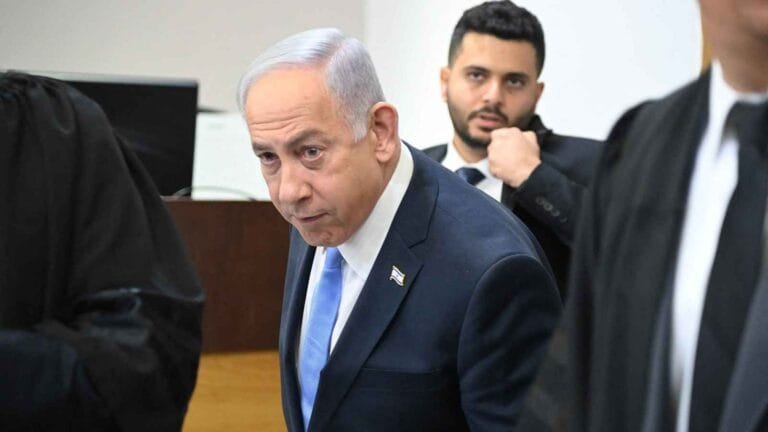
Tel Aviv, Israel – Israeli Prime Minister Benjamin Netanyahu appeared before judges at the Tel Aviv District Court on Tuesday to respond to the serious and ongoing charges against him related to financial and administrative corruption.
This session marked the 88th time Netanyahu has appeared in court since the start of his historic trial, reflecting the complex legal and political landscape surrounding his political future.
Today’s session focused on continuing the questioning of Netanyahu and confronting him with the evidence in “Case 2000.” This came after the prosecution completed its detailed questioning of him in previous court sessions in the other two cases known as “Case 1000” and “Case 4000.”
The session was shortened for security reasons, and the three files
Israeli Channel 12 reported that the panel of judges agreed during today’s deliberations to shorten the hearing. This came in response to a request from the defense team and due to Netanyahu’s intensive and urgent security and political schedule. No further details were disclosed regarding the nature of these commitments.
Netanyahu faces a series of charges including corruption, bribery, fraud, and breach of trust in three main cases. The formal indictment was filed in late November 2019. Case 1000 involves Netanyahu and members of his family allegedly receiving valuable gifts and benefits from businessmen and wealthy individuals in exchange for government favors and assistance.
Case 2000 revolves around suspicions that he negotiated with Arnon Mozes, publisher of the newspaper “Yedioth Ahronoth,” to obtain positive media coverage that would benefit his political image. This was allegedly in exchange for undermining a rival newspaper.
Case 4000 is considered the most serious, involving the provision of millions of dollars in regulatory and financial favors to Shaul Elovitch, the former owner of the Israeli news site Walla and the telecommunications company Bezeq. This was allegedly in exchange for favorable media coverage for him and his family.
Refusal to admit guilt and prosecution by the International Criminal Court
Since the start of his trial in 2020, Benjamin Netanyahu has categorically refused to plead guilty, maintaining his denial of all charges and claiming they are merely a “political campaign and settling of scores aimed at ousting him from power.”
This insistence places Netanyahu in a constitutional predicament, as Israeli law does not allow the president to grant a presidential pardon to any defendant except after a clear admission of guilt.
Netanyahu’s legal troubles are not limited to the domestic level; in addition to the ongoing trial in Tel Aviv, the Israeli Prime Minister has faced an international arrest warrant and mounting pressure since 2024. This came after he became wanted to appear before the International Criminal Court on charges of committing war crimes and crimes against humanity during military operations in the Gaza Strip.