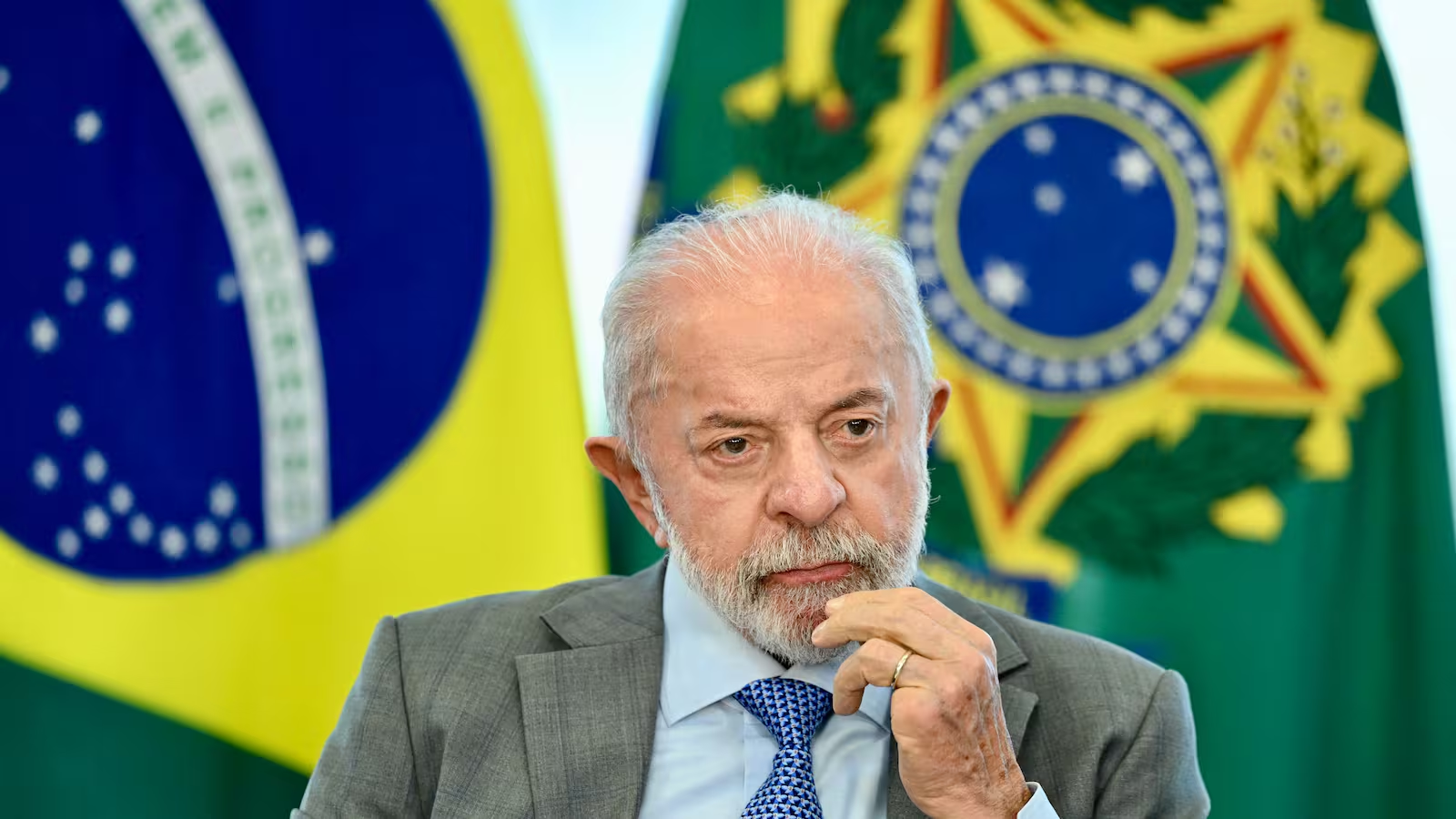
Brasilia – The Latin continent witnessed a wide-scale political and diplomatic uprising to confront escalating American influence inside the Western Hemisphere. The mobilization of southern capitals materializes as an embodiment of the policy of rejecting US pressures on Cuba which numerous leftist governments visibly adopted. Brazilian President Luiz Inácio Lula da Silva led a wave of furious criticisms against recent threats originating from the White House. Lula da Silva proclaimed that enforcing stringent economic sanctions will not contribute to constructing political stability within the region in 2026. Brazil attempts to forge a unified front to shield Havana from international isolation, defending independent regional political resolutions with distinction.
Broad Leftist Solidarity and Sincere Calls to Respect Absolute National Sovereignty
Past days witnessed highly convergent political stances from leaders and officials of South and Central American nations successively. Leaders considered that sustaining the language of intimidation directly contributes to complicating the livelihood and social conditions of the neighboring Cuban population. The Brazilian President asserted during diplomatic gatherings in Brasilia that mutual dialogue is the solitary foundation for managing continental relations. Mexico, Venezuela, and Colombia back this orientation rejecting American military interventions or cyber and aerial threats directed at the island. Academics argue that the continent is no longer a backyard for executing Washington’s federal dictates as was prevalent during the past century.
These frictions coincide with suffocating global economic crises that mandate intensifying commercial cooperation instead of military disputes. Leftist leaders clarified that retreating from the path of diplomatic understandings visibly threatens shipping lines and energy security across the Caribbean Sea. Latin capitals demand the necessity of lifting the financial blockade imposed on Cuban banks to ease the flow of food and medical supplies to civilians. Regional blocs such as the “CELAC” organization seek to draft a unified defensive strategy guaranteeing the protection of national sovereignty for all members with equity.
Regional Anger Over Trump’s Declarations and Genuine Anxieties of Re-Polarization
Conversely, US President Donald Trump’s declarations regarding Cuba triggered a wave of intense anger across contemporary Latin political circles. The Trump administration threatened to enforce rigid commercial sanctions on nations supplying military or logistical facilities to Havana inside the zone. Diplomatic elites fear the return of Cold War atmospheres and acute bilateral polarization between Washington and South American nations regularly. Experts anticipate that this harsh policy will spark brand-new diplomatic and economic disputes impacting foreign investment movements. Brazil initiated updates to commercial exchange terms with its Eastern partners to minimize reliance on American markets and the US dollar.
Strategic observers argue that current movements reflect a genuine desire among Latin nations to fortify their sovereign decisions globally. Popular calls escalate regarding the necessity of constructing more balanced international alliances resistant to external economic pressures practiced by superpowers under 2026 transformations. Closed assemblies sustain among the region’s foreign ministers to synchronize stances prior to the UN General Assembly summit convening in New York. Tracking the backgrounds and fallout of the policy of rejecting US pressures on Cuba remains the primary geopolitical headline monitored in the Americas for 2026.