New Delhi, India – In a strongly worded military and political message to its neighbor Islamabad, Indian Army Chief of Staff General Upendra Dwivedi issued an unprecedented warning to Pakistan. He asserted that its continued harboring of terrorist groups and its hostile actions against Indian national security would require it to “decide whether it wants to remain part of the geography or become merely history.”
The Indian Army chief’s stern remarks came during his participation in a high-level interactive session hosted by the Uniform Unveiling Initiative at the Manikshu Centre in New Delhi, as part of the Sena Samwad event, according to the official Indian news agency PTI. These developments coincide with the country and the Indian Army commemorating the first anniversary of Operation Sindor, a military operation that marked a significant turning point in the conflict between the two nuclear powers.
During the event, in response to a specific question about how the Indian armed forces would react if the field and political conditions that led to Operation Sindhur last year were to recur, General Dwivedi reaffirmed his country’s firm strategic stance.
Although brief, observers interpreted the remarks as a clear and direct message of deterrence. This message was intended to make it clear to Pakistan that Indian forces would not hesitate to use military force to protect their borders and their people.
The background to these heightened tensions dates back to May 7th of last year, when India launched Operation Sindhur in response to a deadly terrorist attack in Pahalgam.
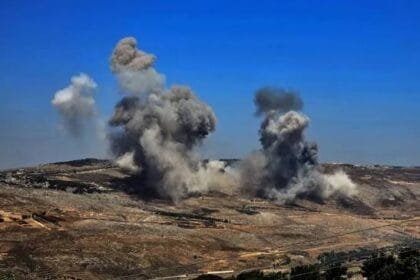
Indian forces then carried out precise air and ground strikes targeting militant infrastructure and training camps inside Pakistani territory. Strikes were also conducted deep within Pakistani-administered Kashmir.
The following days witnessed a significant escalation after Pakistan launched counterattacks. India responded with decisive military action under the same operation. This direct military conflict between the two nuclear-armed neighbors lasted for approximately 88 hours of high alert. The fighting only ceased after mutual understandings were reached on the evening of May 10, thus preventing the region from descending into a full-blown war.