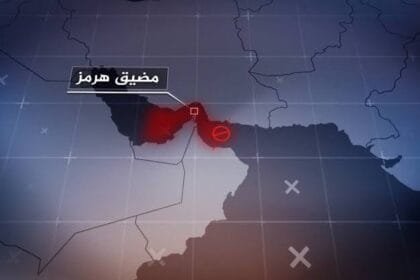
New York – Reuters reported that the United States has made partial amendments to the UN Security Council draft resolution it is seeking to present alongside Gulf nations in response to Iranian threats to block the Strait of Hormuz. This move serves as a diplomatic attempt to bypass the “Veto” threat signaled by both China and Russia during recent consultations.
Dropping “Coercive Measures” and the Chapter VII Maneuver
The amendments circulated by Washington on May 7, 2026, included the removal of the clause that provides the legal basis for “coercive measures” against Tehran. The original draft, submitted by the US and Bahrain, relied on “Chapter VII” of the UN Charter, which empowers the Security Council to impose economic sanctions or resort to military action. Due to strong opposition from Beijing and Moscow, the modified version removed this reference but kept language allowing the Council to consider “future sanctions” should attacks or sea-mining continue.
The Self-Defense Loophole and Individual Military Response
Despite removing the collective enforcement clause, Washington insisted on retaining a phrase reaffirming “the right of member states to defend their vessels.” Observers interpret this as an attempt to keep the door open for “individual” military responses or international coalitions outside the UN framework. While the amendment does not explicitly authorize the use of force, it does not rule it out if commercial vessels face direct threats in the international waterway.
Russia Rejects Amendments and Calls for Withdrawal
Despite these diplomatic “concessions,” the resolution’s fate remains uncertain. Russia expressed its opposition to the revised version as well, with Deputy Foreign Minister Alexander Alimov telling Izvestia on May 9 that Moscow cannot support this direction. He urged the US and Bahrain to withdraw the draft to avoid further regional escalation. Observers fear a repeat of the dual veto that thwarted a similar resolution in April, unless a consensus is reached that neutralizes Russian and Chinese concerns over “legitimizing military intervention.”