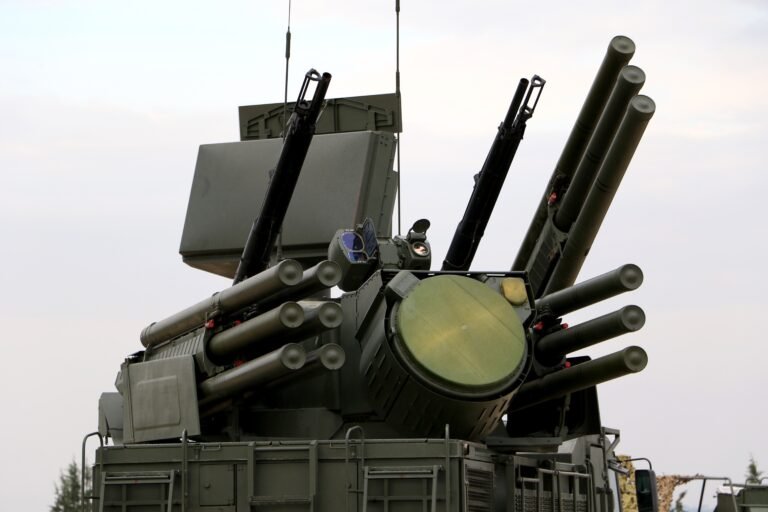
Moscow – In an aerial confrontation described as the most intense in recent times, the Russian Ministry of Defense announced the success of its air defense systems in shooting down 93 hostile drones within a record window of only 7 hours. Obviously, by May 2026, Russian defenses faced a “multi-wave” attack targeting various regions within the country. However, the high readiness of monitoring and interception systems enabled forces to destroy all targets in mid-air, preventing them from approaching vital facilities.
“Total Mobilization”: How Did Russian Defenses Handle Consecutive Drone Waves?
Official data clarified that the interception process was carried out through high coordination between multi-layered air defense systems pre-deployed to handle such scenarios. Accordingly, intensive aerial movements were monitored and dealt with immediately upon entering targeted zones. Clearly, the scale of the attack necessitated a broad state of alert, with aerial surveillance measures strengthened across vast geographical ranges to ensure sky security against any further infiltration attempts.
“War of the Skies”: Will the Failure of the Mass Attack Change the Regional Escalation Balance?
Observers believe that Moscow’s success in neutralizing such a large number of drones in a short time reflects a significant evolution in aerial deterrence capabilities. As a result, Russia is moving to continuously bolster its defensive capabilities to counter “swarm” attack tactics. In this landscape, the region remains in a state of military ferment, as these repeated attacks place the international community before fears of an expanding confrontation, at a time when “drone warfare” has become the primary headline of the ongoing escalation along the borders.